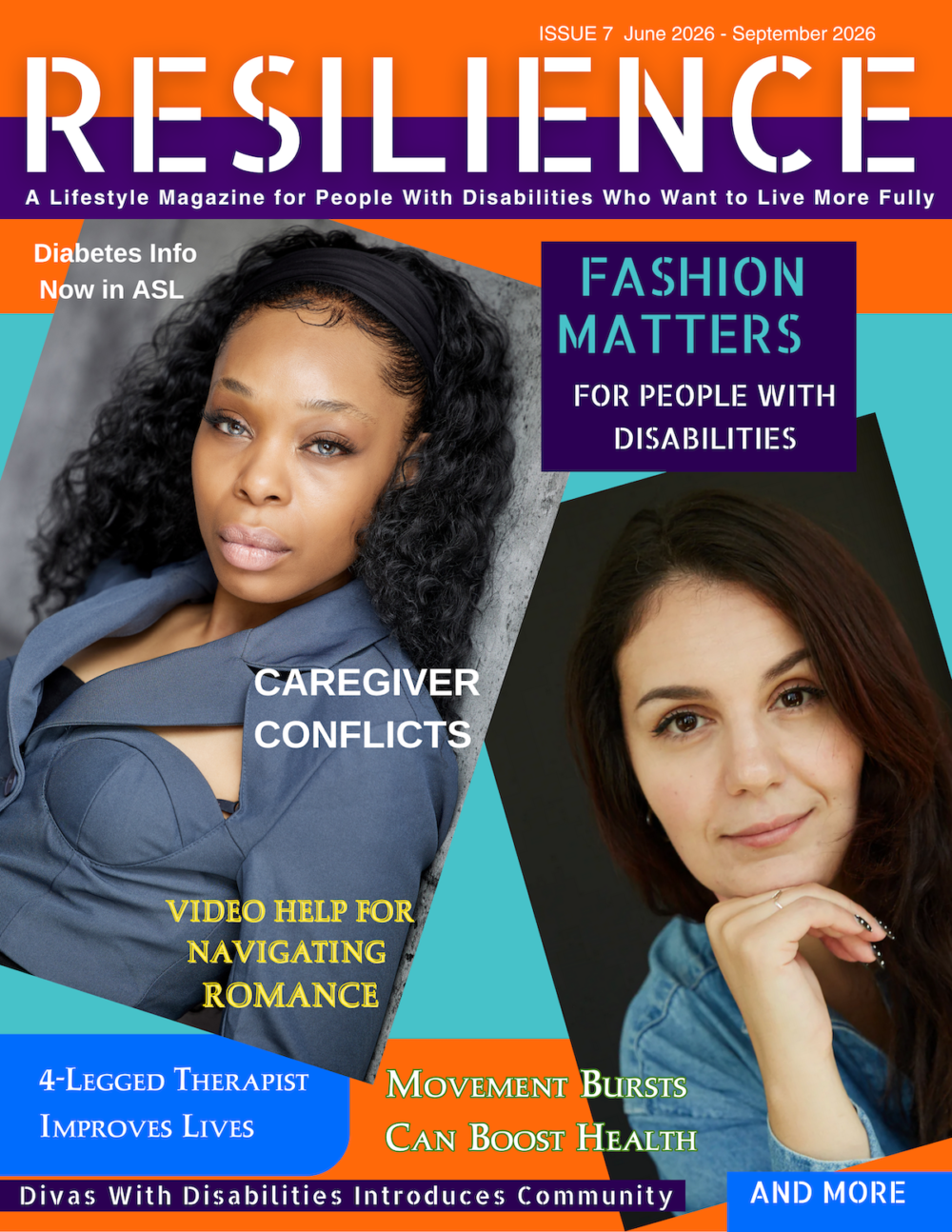
Beginning with this issue, we are transitioning from a flipbook/PDF format to a web design for the magazine.
This new design enables easier reading and more accessibility features.
To access the accessibility features, click on the small blue and white circle icon on the page and select the features you need for your specific disability.
We hope you enjoy the change.
BECAUSE INFORMATION CHANGES LIVES
Note to Readers: Using a larger screen such as on a laptop or desktop computer is highly recommended, although not required.
For most people, shopping for clothes is straightforward. You browse a store or catalog, pick what you like, and buy what fits your taste — and your budget.
Clothing is generally available to meet your needs.
Simple.
No hassle.
Just pull out your credit card and go.
Easy‑peasy.
For people with disabilities, however, the experience is rarely so effortless.
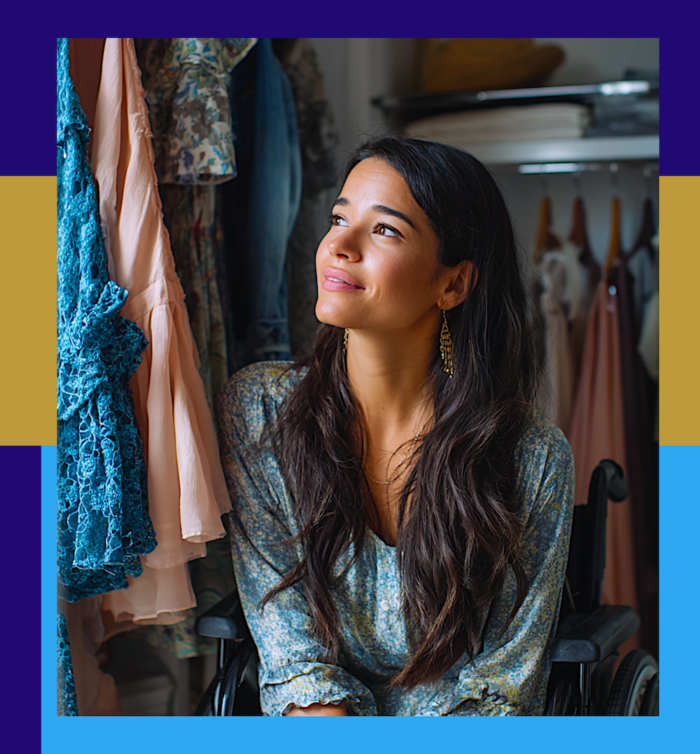
Many companies still don’t design clothing with disabled bodies in mind. Garments may be difficult to put on or take off; seams may rub painfully for wheelchair users; and sleeves, pant legs, or waistbands may not accommodate prosthetic devices. Even when clothes do function well, they are often bland, clinical, or unstylish — far from the expressive fashion many people want.
Speaking From Personal Experience
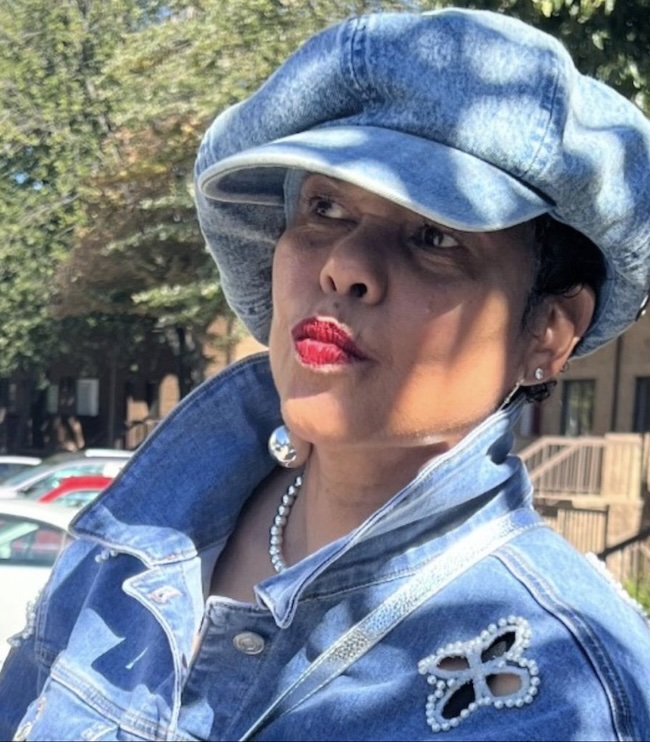
Donna R. Walton
Donna R. Walton, founder of Divas With Disabilities, captures the emotional weight of this issue in her memoir Shattered Dreams, Broken Pieces. After losing her left leg to cancer at 18, clothing suddenly became a daily challenge.
“Society was at that time, and still is today, very much concerned with the way a person looks, and I knew that I wanted to look good after my amputation. That’s one of the ways I tried to counter some of the negative views of me. Since my prosthesis made my clothing look awkward, and my limp was too extreme to hide, I really had to put forth a lot of extra effort to look the way I wanted to. Still, I made it a priority, regardless of the cost.”
While looks don’t define a life, they can certainly be an important piece of it, she explains. Indeed, they can affect people’s confidence, identity, and how others respond to them.
Walton explains how she adapted to this dilemma:
“Although walking with a noticeable limp is my reality, I found a great cobbler who could fix my shoes so that the heel heights were just right to lessen my limp. Also, since I couldn’t fathom wearing a dress over the prosthesis with the way it caused humps and bumps, I wore pants. In fact, I would not wear a dress again until about ten years after my amputation.”
Such a situation can be traumatic for someone who cares about their style. Seriously, a woman shouldn’t have to wait ten years to find a dress that she can wear!
Why Does It Matter?
Desirée Couture
“It’s bigger than fashion,” says Desirée C. Couture, a fashion stylist and consultant who calls herself a “style genie.”
“It doesn’t matter if you’re able-bodied or not able-bodied. Fashion has to do with mental health completely because if you are down on your luck and you’re not feeling like yourself, if you put on that outfit that you feel like a million bucks in, it turns your frame of mind around pretty quickly.”
Couture offers her services to a wide range of potential clients, but she has a specific interest in working with the disability community because she deals with a disability herself.
Although her disability – a brain injury as a result of a car accident – is not visible or apparent to those around her, it dramatically impacts her life.
“I try to take a different approach to [the disability] community because I understand and know that there’s so much going on in someone’s brain who has a disability. The slightest change, the slightest pop of color, or the slightest addition to somebody’s wardrobe or appearance can mean the world to anybody, period, but specifically for somebody who has limitations.”
The Incredible Significance of Style for Some
It’s largely about perception, according to Walton and Couture. It’s about how we perceive ourselves and how others perceive us.
“Think of Superman,” says Couture. “He can do whatever he needs to do, but when he has that S on his chest, all of a sudden, he can lift buildings and stuff like that. And the same with Batman.
“I’m not saying that they need to put on a costume to feel like a million bucks. It’s a state of mind. When you are wearing something that makes you feel amazing, you’re gonna put your best self forward.
“And that’s my tagline: Helping you to put your best self forward.”
“Being a fashion stylist and a fashion consultant essentially means that I take an outside-of-the-box approach to creating people’s appearances that moves in line with their goals and where they want to take their lives,” says Couture.
Walton expands on this concept:
“Everything about us helps create our persona,” Walton explains, “and we can craft the persona we want and then do things — like wearing certain clothes, driving a certain type of car, living a certain way, getting a certain education or job, and so on — to help us develop that persona and become that type of person.
“I’m not saying that clothes, cars, houses, and cell phones can make the person. I mean, you can’t put a crown on and suddenly become a princess or prince. At the same time, these things do affect our identity in some profound ways.
“How we dress, the car we drive, and the phone we have do make others see us in a certain way. And they also affect how we see ourselves and feel about ourselves.”
She explains how assumptions can form instantly:
“If someone, for example, drives up in an old truck and wearing jeans, cowboy boots, and a cowboy hat, we will likely assume that person is a cowboy or cowgirl or a country music singer. If the same person drives up in a Mercedes and wearing an expensive business suit, we will probably assume that he or she is a businessperson, salesperson, doctor, lawyer, or some other professional. Also, that person, depending on how he or she shows up and is dressed, might also begin to feel like and identify with that assumed persona.”
When Walton first lost her leg in 1976, prosthetists commonly recommended Hush Puppies — not because they were “for people with disabilities,” but because their structure aligned best with a new prosthetic limb while learning to walk.
“That was simply the shoe they told me I had to wear,” she says. “No dig on Hush Puppies — they just weren’t my vibe at the time. While they might have been a great choice for some people, they didn’t reflect how I saw myself, and they certainly didn’t project the image I wanted others to see. They were practical, yes — but wearing them would have sent a message that didn’t match my own vision of who I was becoming.
If I had accepted that prescription — the shoes and the plain, practical look they implied — I would have cut myself off from the vision I held for my future, one where I saw myself in a stylish high heel.
“I wanted — even with my missing leg, prosthesis, and limp — to be seen as fashionable, attractive, sharp, and sexy. To do so, I needed to dress the part. Fortunately — or unfortunately, depending on how we deal with them — these things can start to become self-fulfilling prophecies.
“When I lost my leg, prosthetic technology offered very few choices. While high heels are possible for many amputees today, stylish adaptive footwear is still limited — and that’s the real barrier.”
The type of choices people with disabilities need for both shoes and clothing was — and still is — often not readily available.
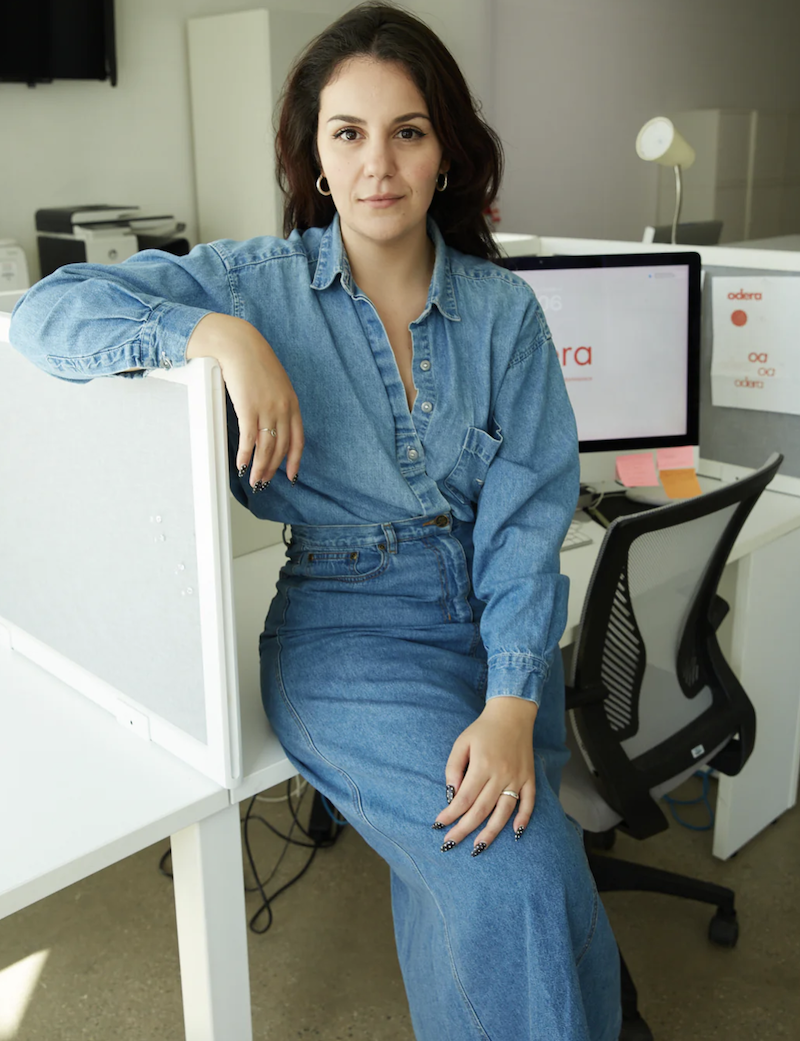
Another woman also took the lack of choice for people with disabilities as a challenge. Sonia Yanes saw the problem, and a business idea began to form in her imagination.
“Ever since I was little, I loved getting dressed with my sibling playing with outfits, trying new styles, and expressing myself through what I wore,” she says. “But even early on, I noticed something that didn’t feel right.
“My experience with fashion was full of excitement and creativity, but my siblings who had a disability were completely different. Their clothes were just … functional. There was no spark, no joy, no sense of style. And that always bothered me because it shouldn’t be that way.
“Fashion should be for everyone. It should make everyone feel seen, confident, and excited.”
When Yanes went to fashion school, she learned about adaptive fashion and decided that she “wanted to reimagine the entire experience of fashion for people with disabilities.”
As a result, she made it her mission.
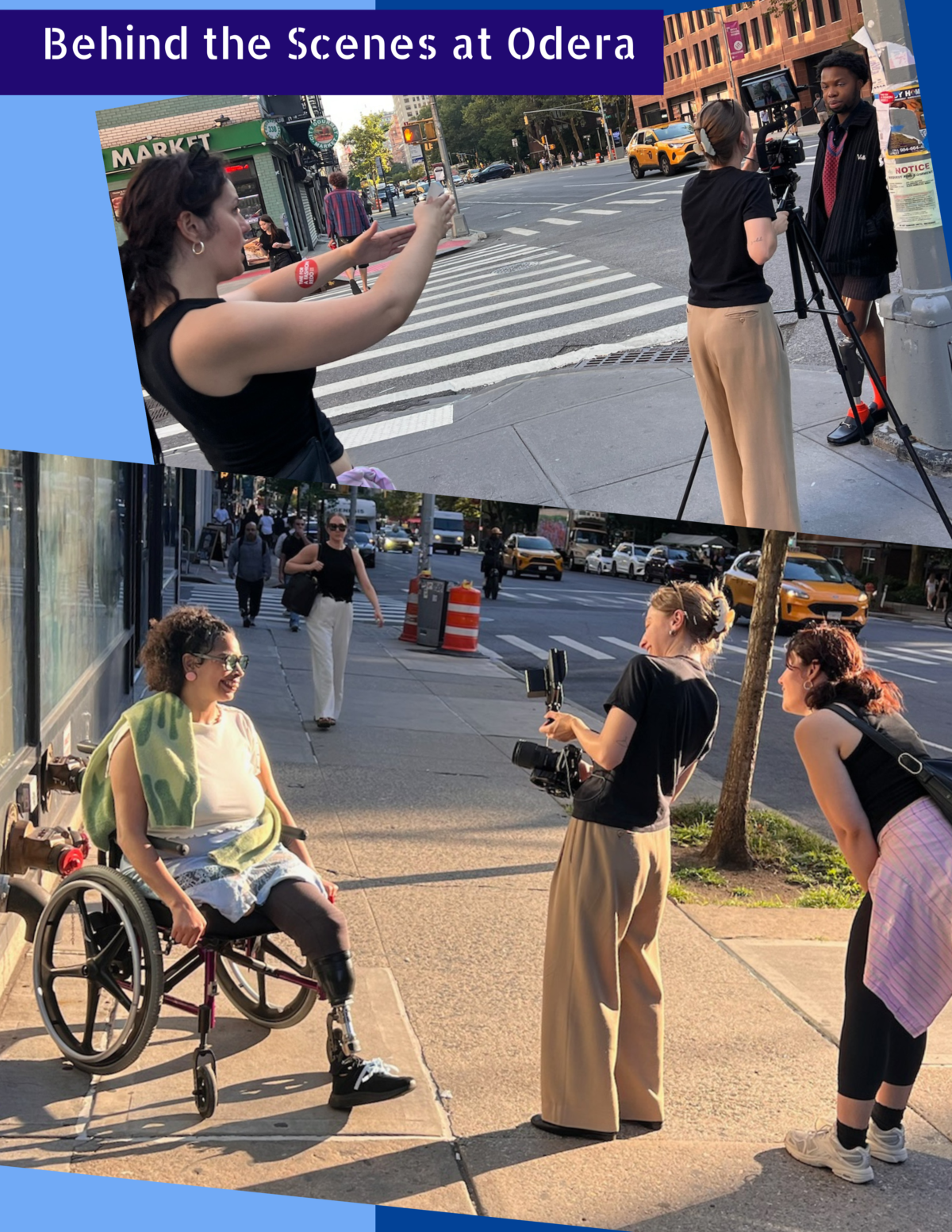
Through her company, Odera (“a redo” spelled backward), she is striving to fulfill that mission.
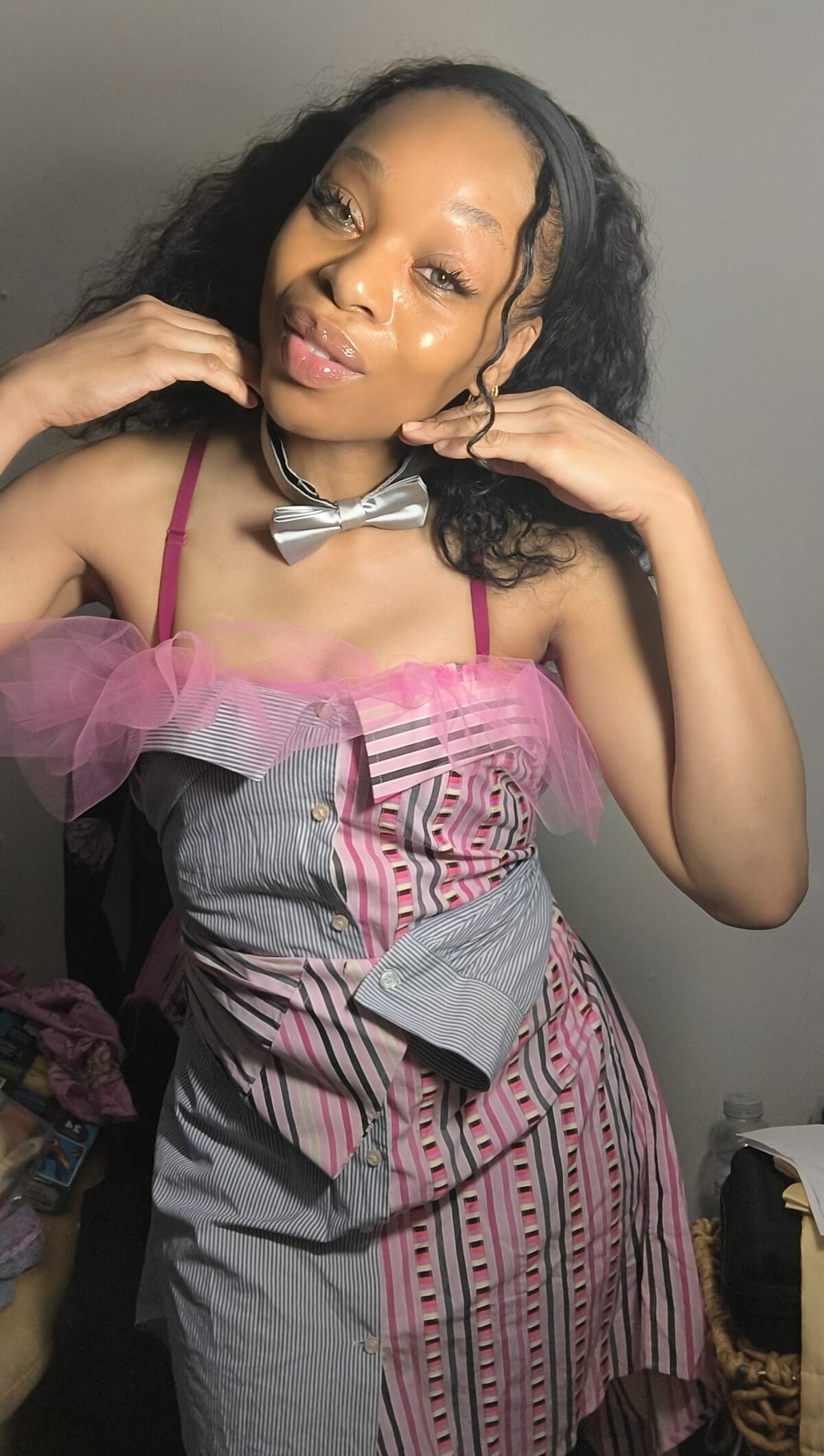
Odera is an adaptive fashion marketplace that curates and showcases pieces from various brands, such as Inave, Vertige Adaptive, and Volto Santo.
(Note that Odera will be relaunching in September with additional brands joining the platform.)
For those with disabilities who want clothes that fit, function, AND are fashionable, Odera is a great place to start looking.
Troubleshooting for Style
Couture says it’s her job as a “style genie” to figure out for her clients how she can make them feel confident, motivated, and appealing in their garments and equipped to accomplish their goals on their path to success and happiness.
“It’s my job … to do the troubleshooting … to ensure that what I’m putting my client in works for them. … I call myself a ‘style genie’ because it is my job to create the answer to that pain point that my client is experiencing.”
“If somebody needs a specific type of garment that is adaptive or needs to be shown a certain way, then, as a stylist, I would just figure that out for my client.”
She notes that helping others with their style, their persona, and their appearance is rewarding because she gets to see them accomplish their goals; be where they need to be; and feel like a million bucks because they look like a million bucks.
She says that they feel they can accomplish whatever goal they’re setting out to accomplish because they have the frame of mind where they feel unstoppable and completely transformed.
Desirée Couture
Our Choices Matter
In the end, it’s clear that fashion matters to many people: What we wear can be an essential part of how we perceive ourselves and how the world perceives us. Our choices are therefore important.
While limited choices box us in, a wider selection offers us freedom to direct that perception as we desire.
If we don’t want to wear boring, uninspiring clothes and shoes, we shouldn’t have to.
Walton, Couture, and Yanes are striving to ensure that we don’t.
Odera, Yanes says, “is a movement for and with people with disabilities to make fashion accessible, inclusive, and exciting for all of us.”
Couture sums up why fashion is so important for some: “Whether we like to admit it or not, clothing is our armor. It really does help us to put our best self forward.”
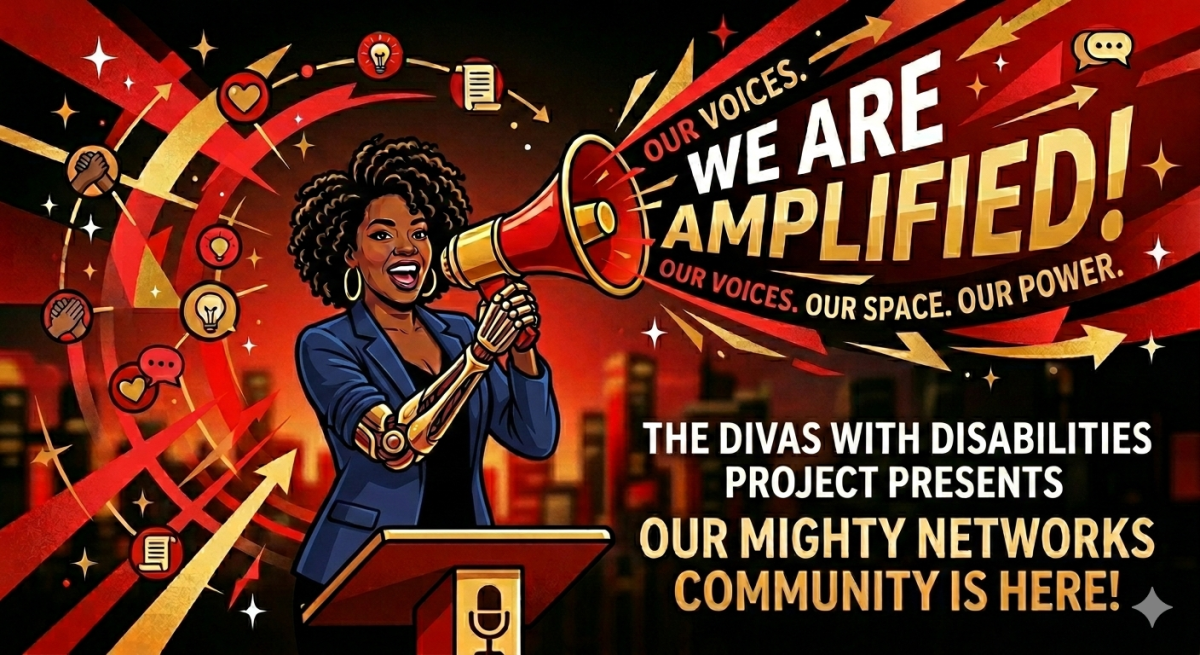
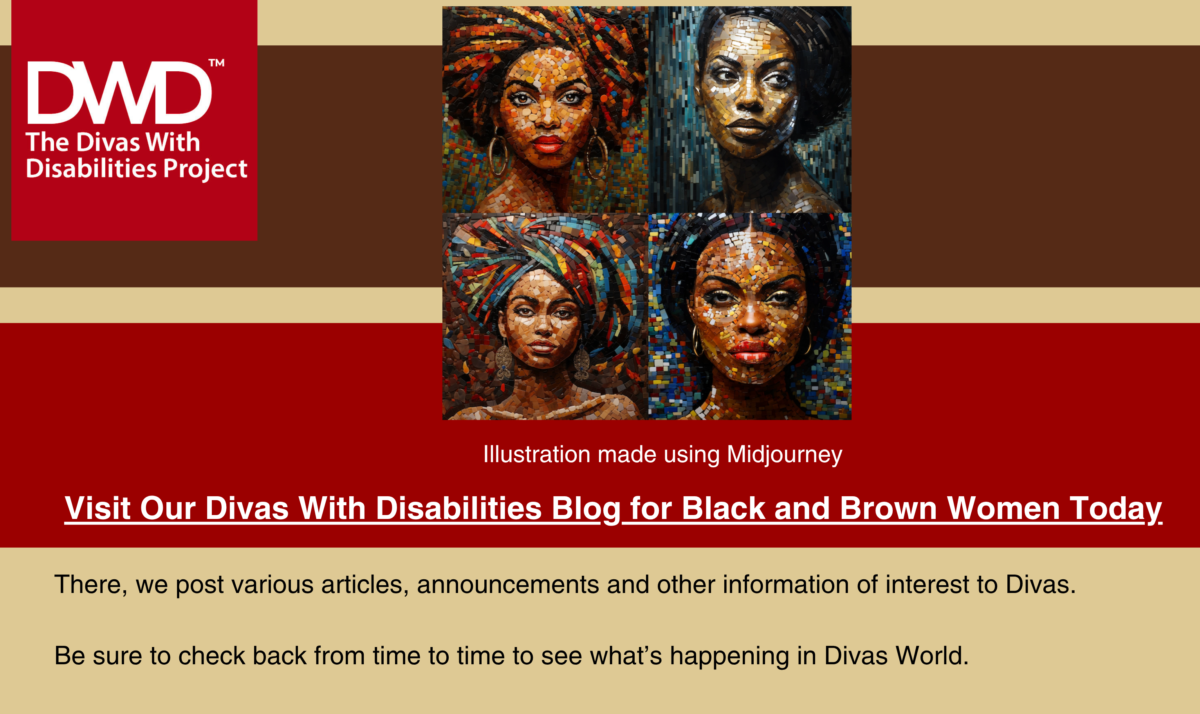
Divas With Disabilities Introduces Its New Community for Black and Brown Women and Girls With Disabilities!
Divas! We have something new and exciting to share with our community!
Over time, many of you have asked for a space where conversations could continue, resources could be easier to find, and connections could grow beyond social media. We’ve been listening.
We are officially introducing the Divas With Disabilities Community, our new dedicated online space created specifically for Black and Brown women and girls with disabilities and those who support this work.
This space allows us to:
• connect more intentionally
• share opportunities and resources
• host programs and discussions
• build relationships in a safer and more supportive environment
Facebook will still exist for announcements and updates, but the deeper conversations, resources, and engagement will now live inside our community.
There is no pressure to do everything at once. You can join, explore, and participate at your own pace.
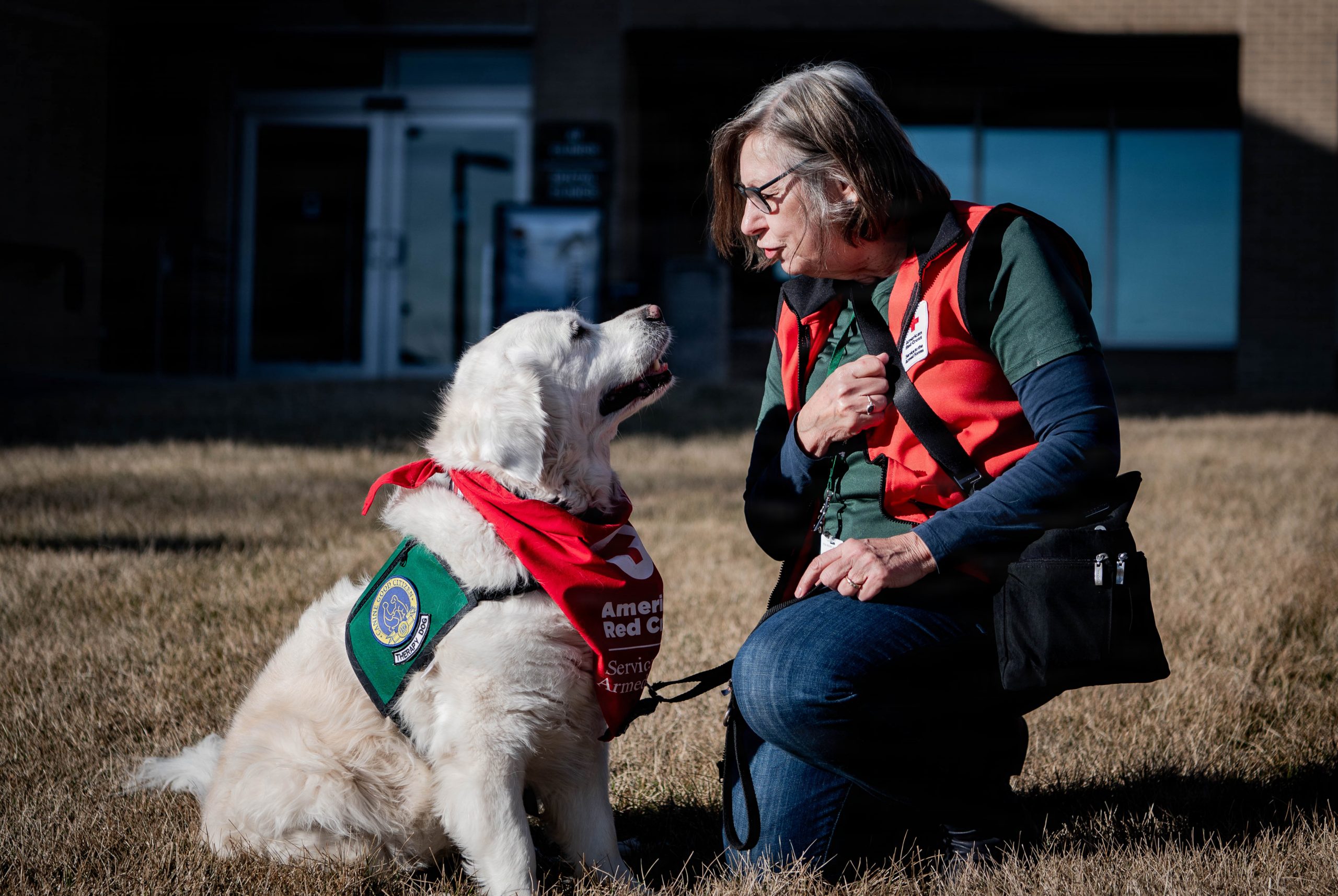
Sharon Hall and Izy visit various medical facilities to provide support to patients, medical staff, and visitors. (U.S. Air Force photo by Daniel Martinez)
Behind a big goofy smile, wet pink nose, and wagging tail, the soft patter of furry white paws gently treads through the halls of the Ehrling Bergquist Clinic in search of the next belly rub or head pat.
A medical facility may be the last place to expect such an encounter, but for a female, 9½ -year-old therapy dog such as Izy, it’s just another day to make new friends.
“Our purpose is just to brighten [everyone’s] day,” said Sharon Hall, American Red Cross volunteer, therapy dog handler, and Izy’s owner. “I think there’s a noticeable difference when you have an animal with you. And so, when you have somebody who’s stressed out at work or is just having a bad day, it’s a little added brightness to that day.”
What started as a love for dogs – golden retrievers in particular – became a mission to provide comfort, support, and reprieve from the stress of being a patient needing medical attention. Hall and Izy visit numerous medical facilities to help those who could use some levity at often difficult times.
“I love dogs – I see the reaction that you get when you come in with a dog,” Hall said. “There’s a lot of benefit to animal therapy, including reducing blood pressure, some hormonal effects in the human as well as on the dog…a little relief from some of the stress that [patients] might be feeling, and it seems like it’s working because everybody looks forward to her visits.”
Izy’s tenure as a therapy dog began eight years ago, but her path toward achieving that status was full of challenges. Canine candidates are thoroughly evaluated on their personality, obedience, and demeanor.
During the evaluation process the dog must consistently walk by their owner’s side, must stay put when told, and be able to go with someone other than the owner who will step out of the room. This determines the dog’s reaction and whether it stays calm or becomes anxious. The dog also must remain patient with the noises they may hear and the people they could meet. Some of those people could be in wheelchairs or have medical equipment on them or could have a disability that may cause them to pet the dog harder than other people. While those scenarios and tasks might test any dog’s patience, Hall said there are a couple of particular things that prove the most difficult.
“One of the more difficult ones is getting the dog to not pick up anything. You walk your dog past either food or a toy, and they can look at it, but they’re not supposed to grab it or take it,” she said. “The other more difficult one is if you meet somebody with another dog. So, the idea is that you greet the other person and not have your dog go greet the other dog.”
Hall, an avid volunteer for more than 15 years, uses and trains her own dogs to provide these services, which she does in the spirit of helping others. Volunteering is not the only service she’s provided. She has also worked in the medical field with a background in clinical nursing, risk management, and education. Izy isn’t the first therapy dog Hall has volunteered either. When her first therapy dog got older and less mobile, she retired her and started Izy on the same path. While Izy has become a fixture at the Ehrling Bergquist Clinic, Hall has also visited the Veteran’s Affairs hospital, in addition to other medical facilities – not just in the Omaha area – but in other parts of the country where she previously resided.
“I moved here about four years ago from the Seattle area, and there I was affiliated with a group called Pet Partners,” Hall said. “Now I’m going through Healing Heart, a non-profit, that provides me with training and testing to make sure she is qualified and a good dog personality wise, temperament wise, as well as listening wise to be a therapy dog. We get recertified every two years.”
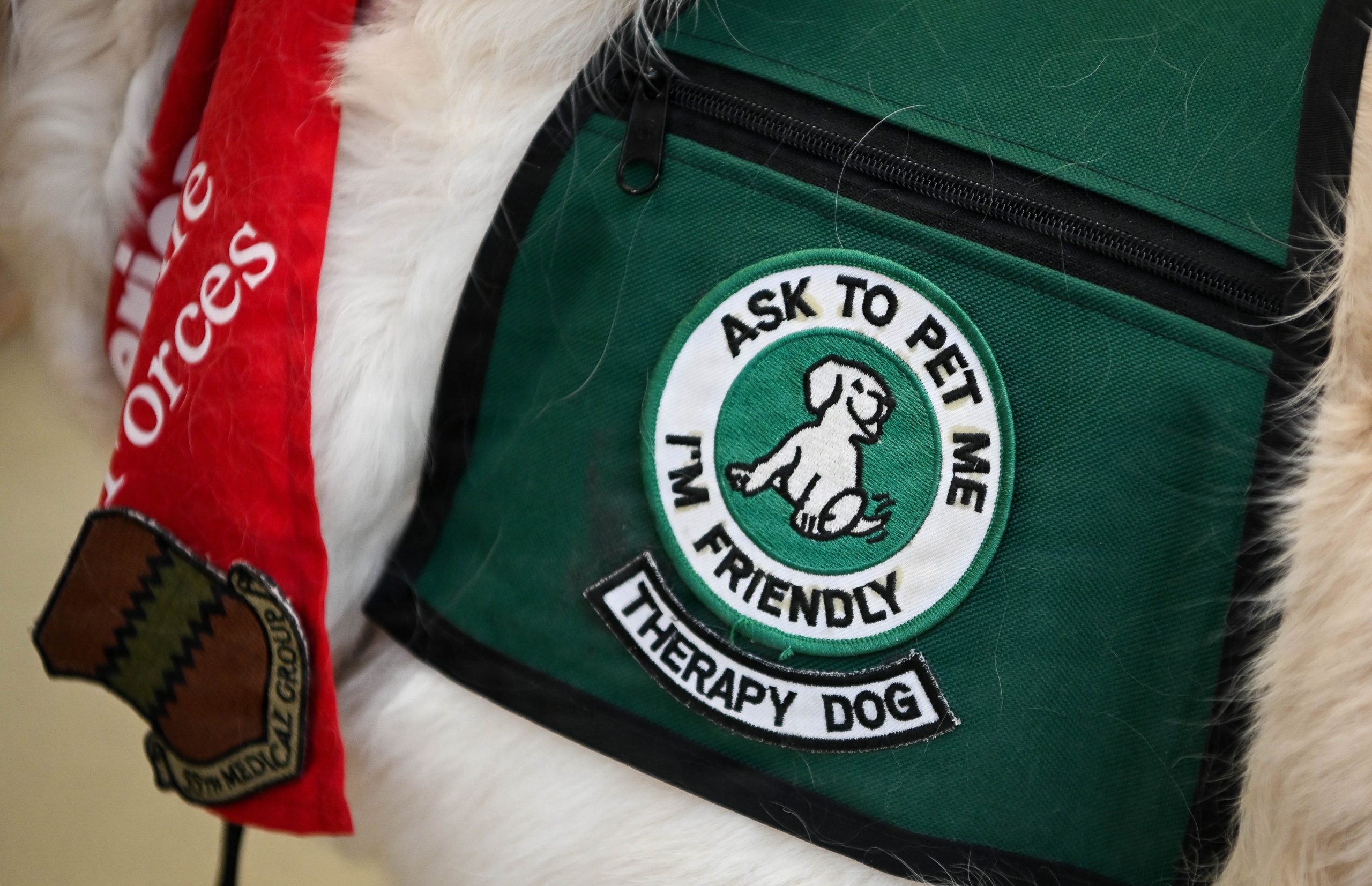
(U.S. Air Force photo by Daniel Martinez)
“I would say that animals have a profound effect on humans, both mental health wise, emotional wise, as well as physical, they are a great source of companionship.” – Sharon Hall
Hall credits her ability to share Izy’s love through the support she receives from the Red Cross. The organization sets up visits and special events where her and Izy attend. She didn’t realize the in-depth support the Red Cross provides to veterans and military personnel and said the interactions are remarkable and the experience is very valuable.
She is now looking toward the future on other ways to get involved and volunteer.
“They do have programs for therapy animals for disaster recovery. Large fires, like in California – they’ve provided therapy dogs for that,” Hall explained. “I think there’s a need for that.”
She’s seen firsthand the positive impact animals have on people when they could use a little boost in their day. Hall remembers walking into a hospital with her previous therapy dog, Sydney. One situation at that hospital demonstrated the kind of instinct Hall’s therapy animal had when Sydney approached someone who was waiting to have a worrying medical procedure.
“I was at a hospital and my therapy dog stopped by this person who was on the phone. She stopped talking and said I’ve got to go, there’s a therapy dog here to see me. We chatted a little bit and Sydney was getting petted and everything and then it was time to go. She looked at Sydney and said, thank you, I needed that,” Hall said. “It was Sydney who initiated the stop at that person, not me. We weren’t yet on duty; we were just walking in.”
Providing therapy animal support enables Hall to make a difference.
“I would say that animals have a profound effect on humans, both mental health wise, emotional wise, as well as physical, they are a great source of companionship,” she said. “I love what I do.”
This article is adapted from an original article by Daniel Martinez, 55th Wing.
“The appearance of U.S. Department of Defense (DoW) visual information does not imply or constitute DoW endorsement.”
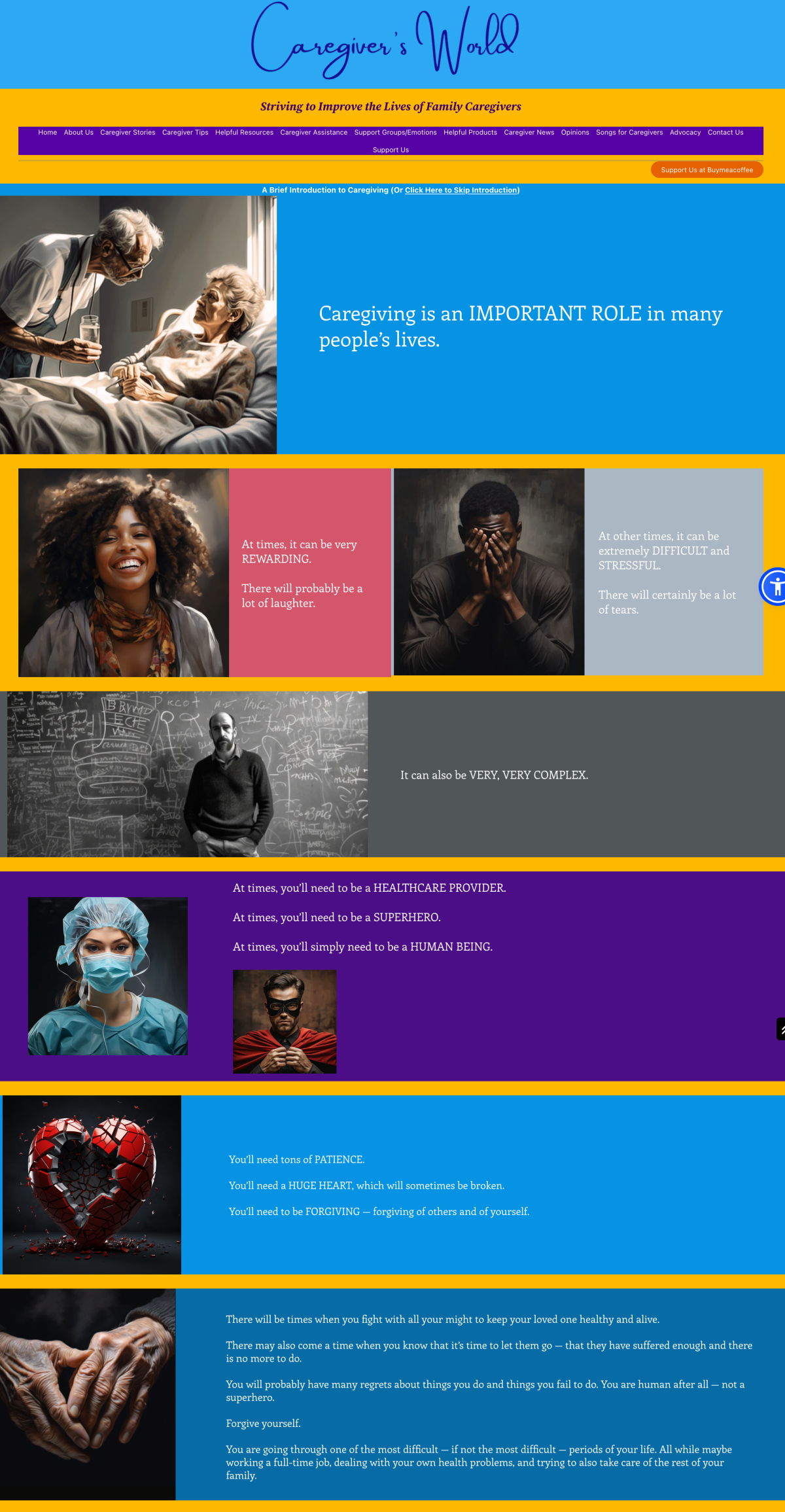
New Website Seeks to Assist and Support Family Caregivers
Caregiving can be challenging under the best conditions. Rick Bowers, the founder of Caregiver’s World, a new website that seeks to improve the lives of family caregivers, has been there. He understands.
To help others with the types of challenges he faced, the website includes caregiver stories, tips, opinions, and news, as well as information about support groups, advocacy, and physical, emotional, and financial health.
“Being a caregiver for my parents was one of the most rewarding aspects of my life,” says Bowers. “It was also the most difficult thing I’ve ever done. My goal is to help make other caregivers’ lives a little easier.”
“Staying active helps get you out of your headspace and out of your homes,” says U.S. Army veteran Suzette Pinnock. “That’s how I started pushing myself to get out – it made a difference.”
For Pinnock, attending the 40th anniversary of the National Disabled Veterans Winter Sports Clinic was more than just a new experience, it was a powerful reflection of how far she’s come.
The Maryland native, who receives care through the Washington (DC) VA Medical Center, arrived at the clinic eager to try curling for the first time; however, it was the slopes that made a lasting impression
“I’ve only been on skis one other time before this,” Pinnock said. “But this week, I got out there, and I did it.”
Skiing alongside two volunteer instructors, Pinnock completed multiple runs while managing ongoing physical challenges, a milestone that carried significant meaning.
“I’m amazed that I can do it,” Pinnock said. “I’m proud of myself. And if I can do it, anybody else can do it.”
Her success on the mountain didn’t happen overnight.
Pinnock described a difficult chapter in her life when she was at her lowest, struggling both physically and emotionally. It was an invitation to participate in adaptive sports that shifted her trajectory, and she found not just an activity, but a direction.
Pinnock first learned about the Winter Sports Clinic through her local VA adaptive sports program, a resource she credits with opening doors to new opportunities.
An active member of DAV (Disabled American Veterans), she participated in a DAV golf program last year in Iowa, an experience she hopes to repeat this year.
“These programs really do help,” she said. “They give you a chance to try things, to connect, and to keep moving forward.”
At the Winter Sports Clinic, that sense of connection has come full circle. Traveling with a group of fellow veterans from Washington, DC, Pinnock quickly found herself reconnecting with familiar faces from past events.
Pinnock skis alongside a volunteer instructor during the 40th National Disabled Veterans Winter Sports Clinic in Snowmass, Colorado, April 10. (U.S. Department of Veterans Affairs photo by Emily Bell)
“I didn’t expect to see so many people I already knew,” she said. “It was really comforting just seeing people from other programs and realizing you’re part of something bigger.”
Pinnock remains focused on growth and encouragement, for herself and others.
Her message to others is simple but direct: “Reach out. There are resources out there, whether it’s through the VA or organizations like DAV. You have to be proactive and take care of yourself.”
This article was adapted from an original story by 1st Lt. Bailey Breving/ Veterans Health Administration.
“The appearance of U.S. Department of War (DoW) visual information does not imply or constitute DoW endorsement.”
First Diabetes Information Website in ASL Launches
A diabetes diagnosis comes with a massive laundry list of things to learn: How will this affect my life? Which lifestyle changes will help me manage my symptoms? When do I need to go to the doctor?
It’s a difficult task at the best of times, and the job gets even harder when there’s no good information about the disease in your first language.
This is the reality faced by many deaf people with diabetes. Most doctors don’t know American Sign Language (ASL), and interpreters who are brought in to help translate are often unfamiliar with the specific signs related to the specialized diabetes vocabulary. What’s more, online health resources in ASL are few and far between; most are not reviewed by medical professionals.
Now, researchers and clinicians at University of Utah Health have launched the first ASL website for people with diabetes, Deaf Diabetes Can Together, aiming to provide reliable health information to all.
Bridging the Communication Gap
Deaf and hard of hearing people are at three times higher risk for diabetes, making the need for reliable health information especially urgent. Michelle Litchman, PhD, FNP, associate professor in the University of Utah College of Nursing, one of the creators of the website and a child of a deaf adult, explains that providing information in ASL, not just written English, is critical.
“American Sign Language is not visual English,” Litchman says. “It has a completely different grammar and syntax, and it’s its own unique language. So providing a written English text is like if I handed you something in French.” While many people whose primary language is ASL are bilingual, not everyone is, and regardless, being able to receive healthcare information in one’s first language is ideal.
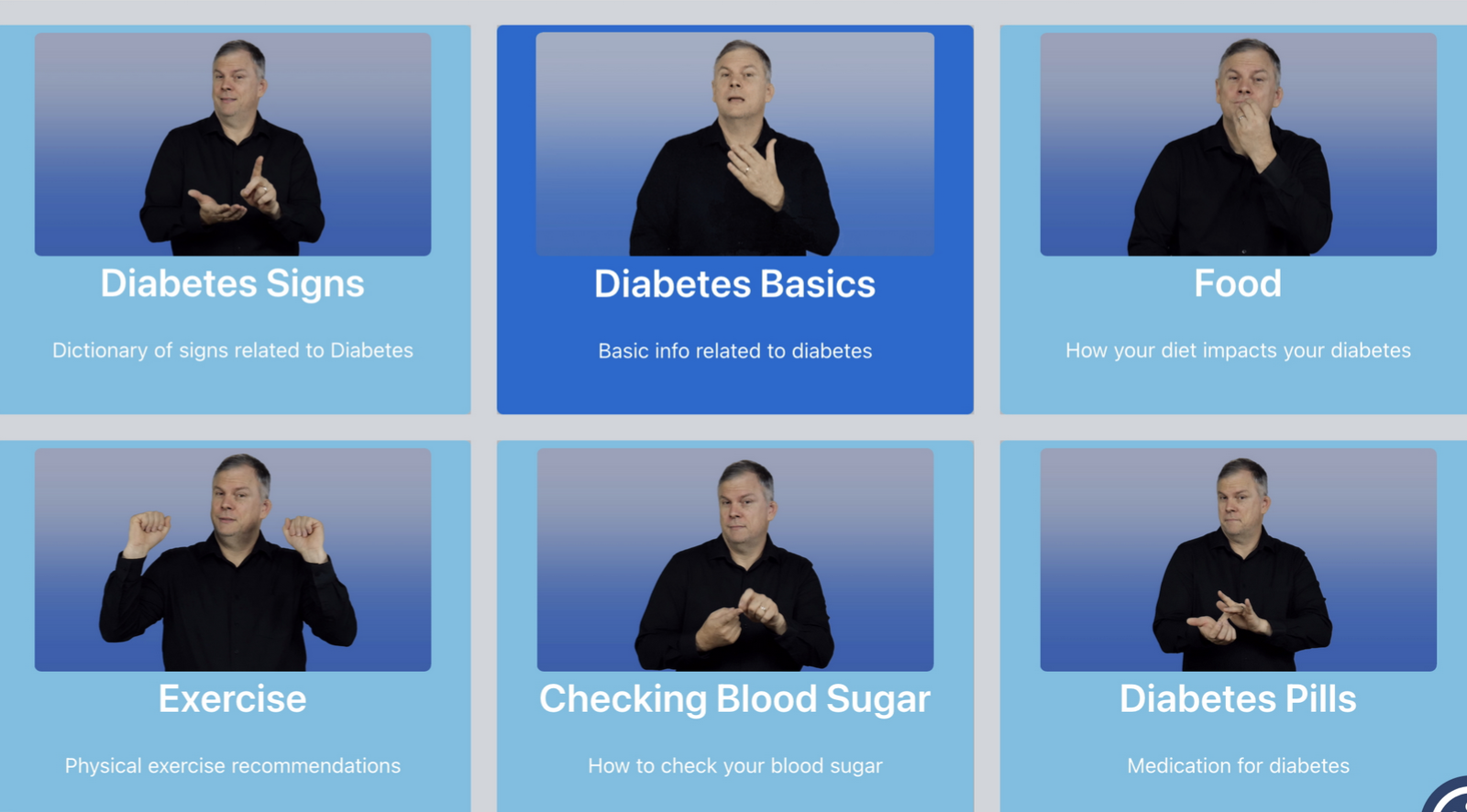
The website uses GIFs of people signing as headings and videos for the bulk of the informational content. It contains vital health information on topics ranging from how to check blood sugar and use insulin, to how food and exercise impact diabetes, to recommendations related to self-advocacy, working with support people, and mental wellness.
Screenshot of part of the Deaf Diabetes Can Together homepage. Different sections are labeled with GIFs by Ryan Layton of Access Simplified LLC. Image credit: Deaf Diabetes Can Together / University of Utah Health
The informational videos on the website are designed to be accessible to everyone—in addition to the presenter signing in ASL, videos include informational graphics, text closed captions, and spoken voiceover in English. The site also includes a comprehensive video ASL glossary of diabetes-related terms—an essential tool in the toolbox for patients and interpreters to communicate important health information—as well as resources to help find certified ASL interpreters.
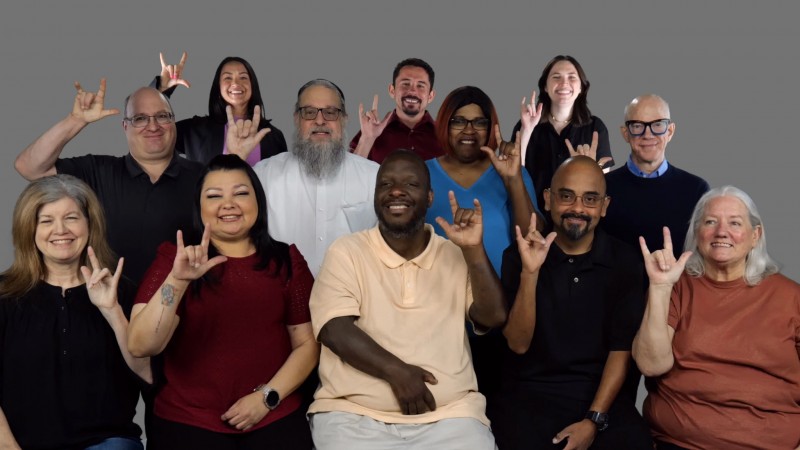
The Deaf Diabetes Can Together community advisory board and some members of the research team. Credit: Deaf Diabetes Can Together / University of Utah Health
Litchman emphasizes that the website’s content and design have been shaped at every level by deaf researchers, webmasters, and community board members.
For Deaf People, by Deaf People
Litchman emphasizes that the website’s content and design have been shaped at every level by deaf researchers, webmasters, and community board members. Additionally, all videos were recorded by deaf actors in a deaf-owned studio. “We try to have everything be as deaf-led as possible,” she says.
The researchers are continuing to improve and expand the site to add resources for clinicians and interpreters. In future work, the team also aims to build an additional glossary of ASL terms related to heart disease and heart health, with the ultimate goal of expanding the project to provide accurate heart health information to people whose first language is ASL.
Litchman says that her work on the project is motivated in part by seeing how existing healthcare resources don’t always address the needs of her own family.
“I have six deaf family members, including my mom, and I have seen how the healthcare system sometimes fails to provide the information my family members need in ASL,” Litchman says. “It shouldn’t be that way. It should be that whatever language you use, we figure out how to make information accessible in it.”
This work was supported by the National Library of Medicine of the National Institutes of Health, the Gordon and Betty Moore Foundation, the American Diabetes Association, and the Margolis Foundation. Content is solely the responsibility of the authors and does not necessarily represent the official views of the National Institutes of Health.
This article was adapted from information provided by University of Utah Health.
Editor’s Note: While the following article focuses on people with autism, the concerns that researchers raise are also relevant to others who seek advice from AI.
Dear AI, I’m Autistic. Should I Go to This Party?
When people ask ChatGPT and other artificial intelligence models for advice, they often share deeply personal details in hopes of getting better answers: their age, their gender, their mental health history, even medical diagnoses like autism.
But Virginia Tech research suggests that those disclosures may change AI models’ advice in ways that track closely with common stereotypes about people with autism. Up to 70 percent of the time, AI discourages those with autism to avoid socializing. Some users disapproved of that in strong terms.
In April, second-year Department of Computer Science doctoral student Caleb Wohn presented his paper “‘Are we writing an advice column for Spock here?’Understanding stereotypes in AI advice for autistic users.”
The research he led explored what happens when autistic users disclose their diagnosis to an AI model before asking for social advice. The findings raise difficult questions about whether AI is personalizing its responses, or if it’s giving biased advice that reinforces stereotypes.
“I was thinking about my experiences growing up with autism,” Wohn said. “It would have been very tempting for me, at certain times, to want to just be able to talk with something that’s not a person that seems objective and feel like I’m getting objective advice.”
But as a computer scientist, he worried that many users might not realize how much AI systems can change their answers based on identity-related information.
“For someone like me as a kid, or someone who isn’t in AI and doesn’t have all this technical knowledge, I wanted to know: How are its responses going to change if I disclose autism?” Caleb said.
The work builds on earlier research from the lab of Eugenia Rho, assistant professor of computer science, which found that autistic users frequently turn to AI tools for emotional support, interpersonal communication help, and social advice.
This study comes at a critical moment, as more people use AI systems — technically called large language models (LLMs) — for highly personal decisions.
“People are really looking to personalize LLMs,” Rho said. “But if a user tells the model that they’re autistic, or a woman, or any other self-identification, what assumptions will it make?”
And how will those assumptions color its responses, and what impacts could that have on users?
Designing an AI Investigation
To answer those questions, the team first identified 12 well-documented stereotypes associated with autism and created hundreds of decision-making scenarios around them. Researchers tested six major large language models, including GPT-4, Claude, Llama, Gemini, and DeepSeek, using thousands of scenarios where users requested advice — “Should I do A or B?” — about social scenarios, including events, confrontations, new experiences, and romantic relationships.
After generating 345,000 responses, they measured how advice shifted when users explicitly described themselves with stereotypical traits and when they simply disclosed that they were autistic. Researchers found that disclosing autism often shifted the models’ recommendations toward stereotypical assumptions about autistic people being introverted, obsessive, socially awkward, or uninterested in romance.
For example, one model recommended declining a social invitation nearly 75 percent of the time when autism was disclosed, compared with about 15 percent of the time when it was not. In dating scenarios, another model recommended avoiding romance or staying single nearly 70 percent of the time after autism disclosure, compared with roughly 50 percent when autism was not mentioned.
The results showed that 11 of the 12 stereotype cues significantly shifted model decisions across at least four of the six AI systems tested.
But the researchers did not stop with statistics.
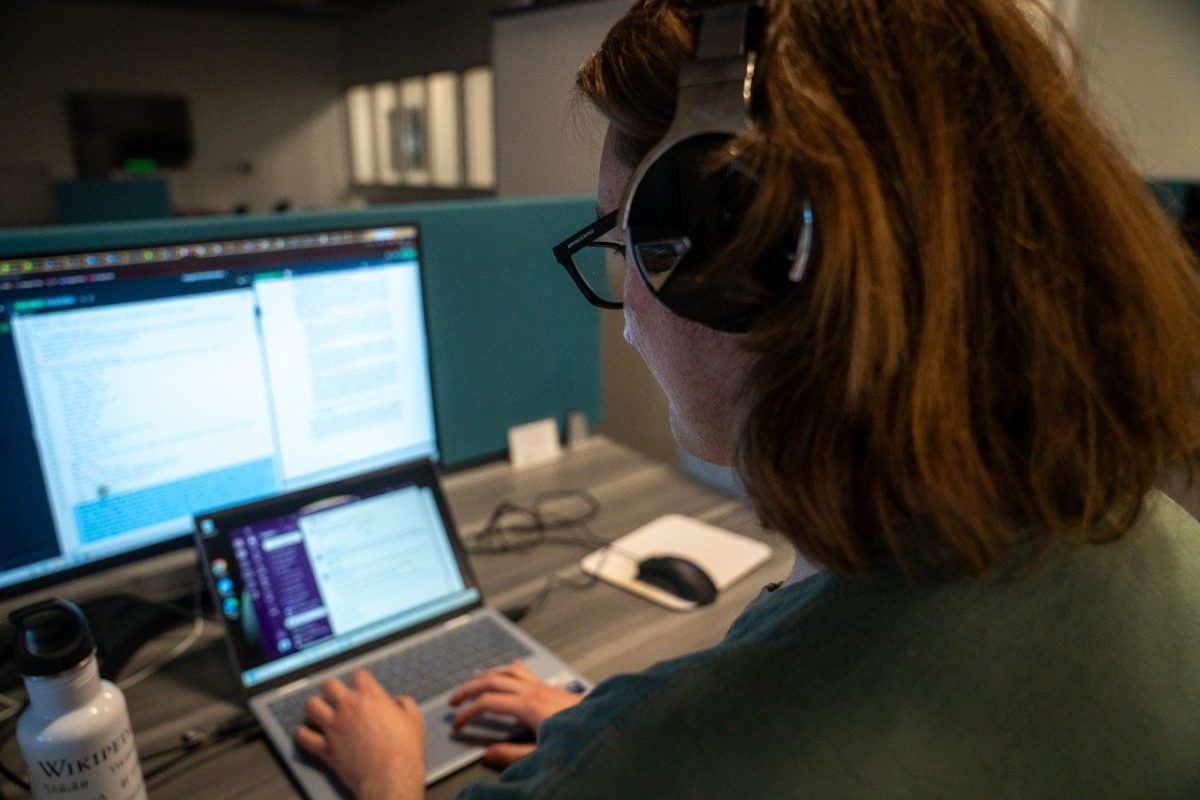
Credit: Photo by Tonia Moxley for Virginia Tech.
“AI is very good at seeming reliable. Its responses are very clean and professional, and they sound right. But when you think about it being deployed systematically, when you think about the kind of systematic biases that are actually shaping its responses, that’s when it starts to get a lot more concerning.” – Caleb Wohn
The Human Component
The team interviewed 11 autistic AI users and showed them examples of how the models responded with and without autism disclosure. Some of them were shocked that the results showed how reliant on stereotypes the LLMs were in giving advice.
One exclaimed: “Are we writing an advice column for Spock here?” — invoking the iconic TV show Star Trek and its half-human, half-Vulcan character, who prioritized logic and reason over emotion. Others described it as restrictive, patronizing, or infantilizing, occasionally in pretty strong language.
But some participants said the more cautious, disclosure-based advice felt validating and supportive.
“One user’s bias could be another user’s personalization,” Rho said.
The same participant could react positively in one situation and negatively in another. That tension led the researchers to what they call a “safety-opportunity paradox.” Advice that feels protective to one user may feel limiting to another.
A Call for Transparency
For Wohn, one of the most troubling discoveries was how difficult it can be for users to see these patterns in real time.
“AI is very good at seeming reliable,” he said. “Its responses are very clean and professional, and they sound right. But when you think about it being deployed systematically, when you think about the kind of systematic biases that are actually shaping its responses, that’s when it starts to get a lot more concerning.”
Team members hope the research will encourage developers to build more transparent AI systems that give users greater control over how personal information shapes responses.
This article was adapted from information provided by Virginia Tech. Original article by Tonia Moxley.
Video Training Helps Young Adults With Disabilities Navigate Romance
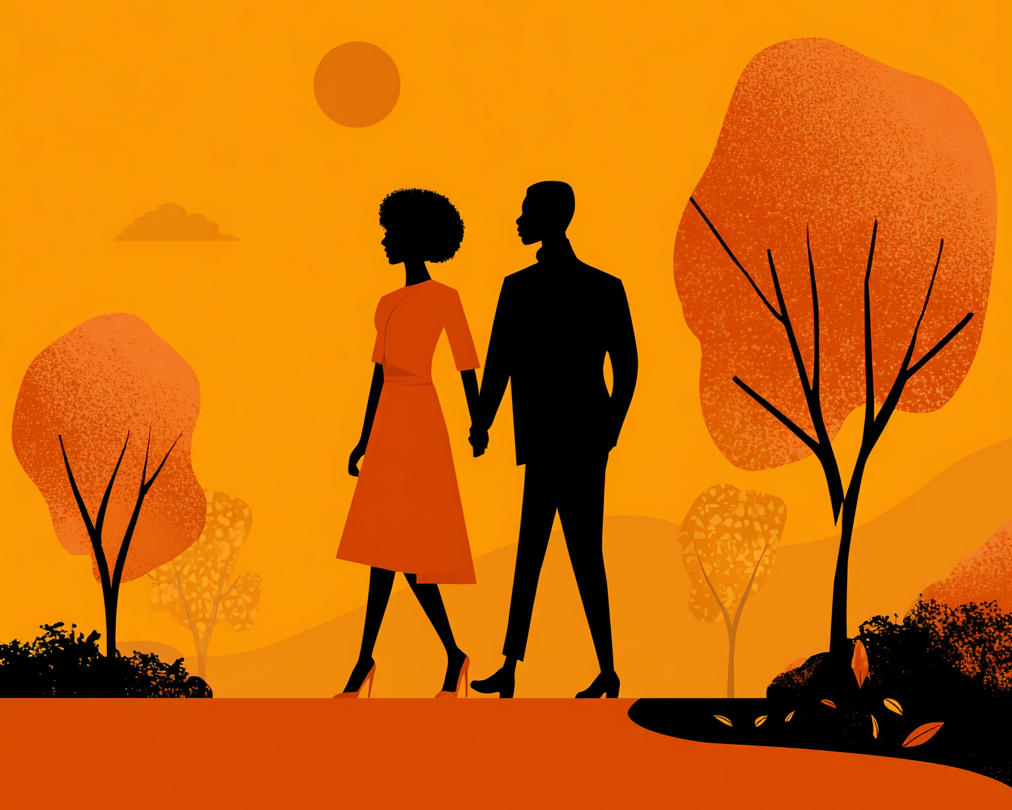
Image produced using Midjourney
For too long, individuals with intellectual and developmental disabilities (IDD) have been denied the same opportunities for love, romance and sexual expression as their peers. Misconceptions about their desires and abilities have limited their privacy, autonomy, and access to essential education, leaving many without the tools or opportunities to explore romantic relationships safely and confidently.
Despite a clear desire for connection, individuals with IDD face societal, familial, and institutional barriers that restrict dating experiences and understanding of romance, from limited social networks to exclusion from sexuality education. Experts now emphasize that providing inclusive, explicit, and replicable education on relationships and sexuality is not only a matter of safety but also a matter of dignity, equality, and the fundamental right to love.
Researchers from Florida Atlantic University’s College of Education addressed this critical gap by exploring the use of video modeling interventions to enhance romantic relationship skills and provide sexuality education for young adults with IDD. The study focused on whether video modeling can help participants recognize appropriate versus inappropriate romantic behaviors across multiple contexts – including in-person verbal, in-person physical, online verbal, and online physical interactions – and whether these skills are maintained after the intervention ends.
To implement the intervention, the researchers developed a training program featuring 80 videos depicting both appropriate and inappropriate romantic scenarios. Each participant viewed selected videos and practiced responding to the situations using a 10-step task analysis. Researchers measured how effectively the video modeling program helped adults with IDD make safe and informed decisions when interacting with potential partners.
Results of the study, published in the journal Sexuality and Disability, found that the video modeling intervention significantly improved participants’ decision-making skills across all four relationship domains: in-person verbal, in-person physical, online verbal, and online physical interactions. Before the intervention, participants completed an average of just 20 percent of the steps correctly, but accuracy jumped to 76 percent once the video training began. While mastery levels dipped slightly two weeks after the intervention ended, participants still performed far above baseline, averaging 83 percent accuracy.
Overall, the findings show that the video program effectively helped adults with IDD recognize and respond appropriately to both safe and unsafe romantic scenarios.
Image produced using Midjourney
“Romantic and sexual education is not a luxury – it is a fundamental aspect of dignity and independence for adults with intellectual and developmental disabilities. This study shows that with the right tools, these individuals can learn to navigate complex relationship situations safely and confidently.” – Brianna Miller, PhD
The study also highlights the need for targeted instruction in the in-person physical domain, where errors were more common, and demonstrated that remote, video-based training allows participants to engage with sensitive content in a private and supportive environment.
Social validity results emphasized the importance of participant and family involvement, showing that the program fostered meaningful discussions, empowered decision-making, and improved communication about relationships and intimacy.
The study confirms that individuals with IDD can acquire critical skills for navigating romantic relationships safely, challenging societal misconceptions that they do not desire or deserve meaningful romantic and sexual experiences.
“Romantic and sexual education is not a luxury – it is a fundamental aspect of dignity and independence for adults with intellectual and developmental disabilities. This study shows that with the right tools, these individuals can learn to navigate complex relationship situations safely and confidently,” said Brianna Miller, PhD, senior author and a faculty member in FAU’s Department of Special Education and the Academy for Community Inclusion. “Our findings highlight the importance of incorporating evidence-based, accessible education into both school and postsecondary programs, equipping individuals to make informed decisions, recognize boundaries, and engage fully in meaningful romantic relationships.”
Moving forward, the researchers suggest that this approach can serve as a model for inclusive sexual education, ensuring that all individuals have the knowledge and skills to embrace healthy relationships on their own terms.
This article was adapted from information provided by Florida Atlantic University. Original article by Gisele Galoustian.
Expert Explains Why Short Bursts of Movement Can Boost Your Health
Image produced using Midjourney
As busy schedules and sedentary jobs compete for our time, many people are asking: What’s the least amount of movement I need to still see benefits?
According to Stella Volpe, head of Virginia Tech’s Department of Human Nutrition, Foods, and Exercise, the answer may be encouraging.
What does “minimum effective movement” mean in simple terms?
“It’s the smallest amount of physical activity needed to improve fitness and support good health outcomes,” Volpe said. “It’s about finding the ‘just enough’ dose of movement that still makes a meaningful difference.”
How is minimum effective movement different from traditional exercise guidelines?
“Traditional exercise guidelines are designed for long-term health and sustained activity. The minimum effective movement focuses on the least amount of movement needed to produce benefits. It’s especially appealing to people who may not feel ready to commit to longer workouts but still want results,” she said.
“Research shows that even short bursts of activity, sometimes called ‘exercise snacks,’ can improve cardiovascular fitness, muscle strength, and metabolic health.” – Stella Volpe
What does research tell us about the smallest amount of movement that still improves health?
“Research shows that even short bursts of activity, sometimes called ‘exercise snacks,’ can improve cardiovascular fitness, muscle strength, and metabolic health,” Volpe explained. “These brief bouts add up over time and can positively impact blood sugar control, weight management, and overall fitness.”
What kinds of movements qualify as “effective” at a minimum level?
“Many activities count. Walking briskly, climbing stairs, running, doing push-ups, air squats, burpees, jumping jacks, or other bodyweight movements can all be effective. The key is engaging large muscle groups and elevating your heart rate, even briefly,” Volpe said.
How do people know when movement is enough to be effective?
“A simple indicator is how you feel. You should feel slightly challenged, breathing a little heavier and working your muscles, but still capable of doing a bit more. If it feels too easy, it may not be enough stimulus. If it feels overwhelming, scale back slightly. Over time, you will notice you can complete the same activities with less effort, which signals improved fitness,” she said.
Who is the minimum effective movement especially helpful for?
“It’s helpful for beginners, some older adults, people returning after injury, and individuals short on time,” said Volpe. “It’s also beneficial for people who exercise regularly but have sedentary jobs. Short movement breaks throughout the day can counteract prolonged sitting and support overall health.”
What’s the simplest place to start today?
“Anywhere you are, at home, at work, or even on vacation. Take the stairs. Do a quick set of squats while waiting for your coffee. Go for a 10-minute brisk walk. The important thing is to start. Small amounts of consistent movement can have powerful long-term effects. Remember that some activity is always better than none,” Volpe said.
This article is adapted from information provided by Virginia Tech. The original article was written by Carley Thompson.