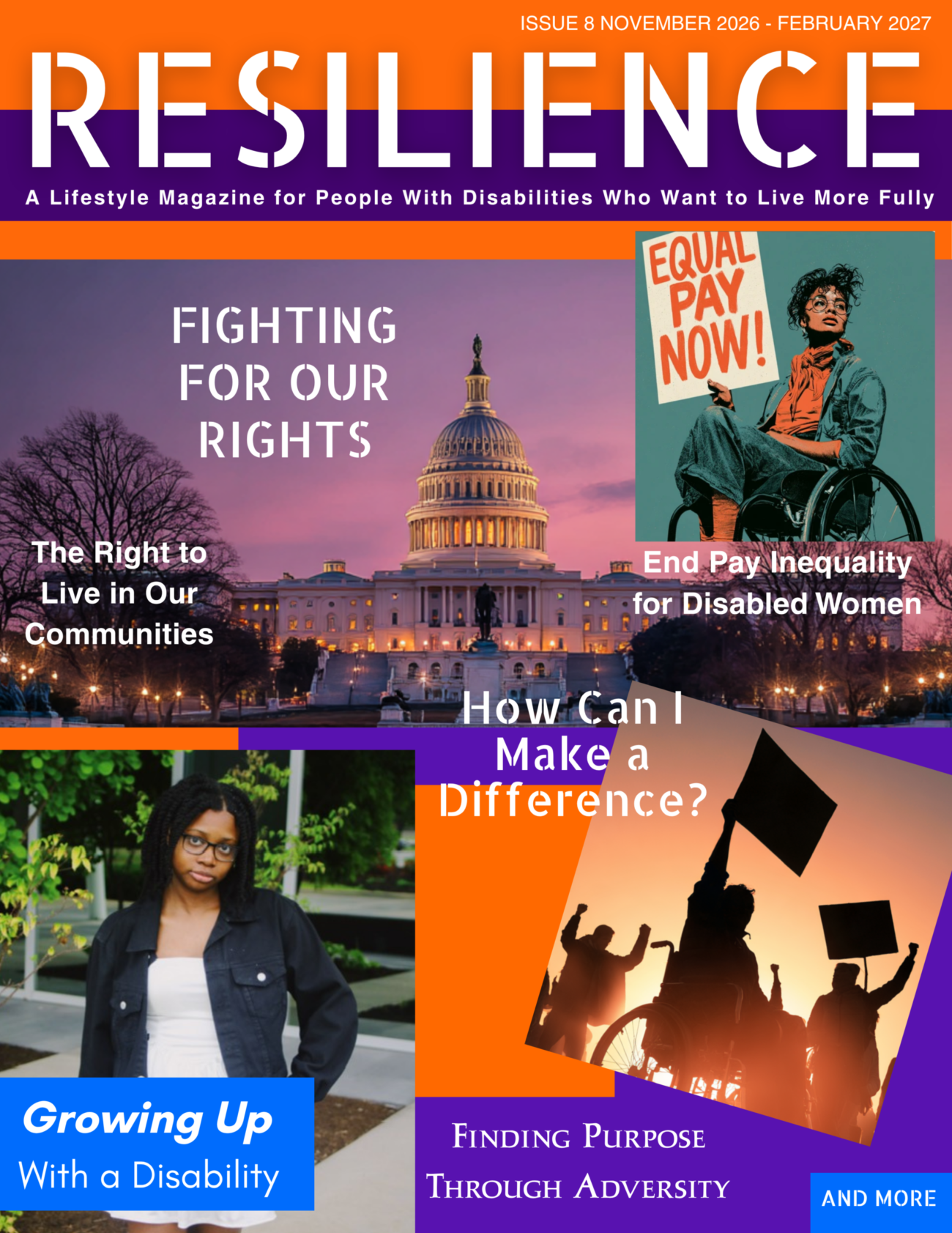
RESILIENCE was founded on the belief that “information changes lives,” and that belief is based on longtime experience.
As a writer and editor for multiple disability-related organizations and publications, I have met and heard from many people whose lives hve been dramatically improved by information – sometimes even just a small amount of information.
Many years ago, I met an older man at a disability-related conference. I believe he had been disabled for more than 40 years. At that conference, he was shocked at what he found available that could help him. He was also saddened that it had taken him so long to discover it. He realized how much his life could have been improved if he’d received that information earlier.
The reality is that sometimes people don’t know what they don’t know, and therefore they don’t even seek it.
RESILIENCE aims to go out and find those people and give them life-changing information.
That is our mission.
We hope you enjoy the issue and that you will discover that nugget of information you need today.
BECAUSE INFORMATION CHANGES LIVES
Note to Readers: Using a larger screen such as on a laptop or desktop computer is highly recommended, although not required.
Advocating for Ourselves and Others With Disabilities
Can We Really Make a Difference? Is It Time to Get Involved?
By Zach Kiser
Whether by wins for disability rights in the distant past or against more recent political threats, disability rights advocates have shown that organized and sustained advocacy efforts can improve lives. The question today is how each of us can contribute to further positive change for people with disabilities.
Unfortunately, throughout the United States, previously won protections for people with disabilities are being threatened again, and there is therefore the need to continue the fight.
Issues We Now Face
While diversity, equity, and inclusion (DEI) is often discussed in terms of race and gender, the Trump administration’s threats to DEI is of concern to the disability community as well. Government opposition to such inclusion programs can also threaten opportunities for disabled people in various areas of life such as employment, education, and government services.
In a September press release, the American Association of People with Disabilities
(AAPD) condemned Department of Labor actions reversing disability employment requirements for federal contractors.
The AAPD, the release said, “strongly condemns the latest regulations in a series of harmful, anti-disability employment actions taken by the federal government: A new final rule issued by the US Department of Labor on August 21, 2026, modifies and reverses disability employment regulations under Section 503 of the Rehabilitation Act.
‘The recent decision by the Department of Labor to reverse key regulations that incentivize employers to hire individuals with disabilities and to track disability employment data is the latest in a concerted federal effort to roll back decades of progress towards workforce opportunity for disabled Americans,’ said Maria Town, AAPD president and CEO.”
In addition to employment concerns, threats to programs such as Medicaid, Medicare, the Supplemental Nutrition Assistance Program (SNAP), and Social Security can have serious consequences for people with disabilities who depend on these programs.
Additional threats even put our freedom at risk.
Disability advocates have fought for decades for the right of disabled people to live in our own homes and communities rather than be unnecessarily confined in institutions. In June 2026, the Justice Department’s Office of Legal Counsel issued an opinion interpreting federal disability law in a way that challenges the understanding of the government’s obligation to provide services in the most integrated setting appropriate.
These threats remind us that our rights must not be taken for granted. They must be fought for, enforced, defended, and, when necessary, expanded.
I follow several rights organizations, and the slogan of one of them, the Center for Constitutional Rights, is “Justice Takes a Fight.”
Can we really make a difference? Is it time for us to get involved and joint the fight?
The history of disability advocacy offers an encouraging answer to both questions.
When Advocacy Changed History
The past victories of disability advocates and our allies show that determined advocacy can turn seemingly impossible goals into tangible improvements in people’s lives.
1. The 504 Protest
In 1973, Congress passed Section 504 of the Rehabilitation Act. Although this act established important federal protections against disability discrimination in programs receiving federal financial assistance, the regulations needed to implement those protections remained unsigned for years.
Tired of waiting, in April 1977, people with disabilities and their supporters organized protests at federal offices around the country. In San Francisco, about 150 activists occupied a federal building for almost a month and demanded that the government implement Section 504 without weakening its protections.
On April 28, 1977, the responsible federal official signed the regulations.
This protest became a landmark win in disability-rights history. It showed that disabled people could organize, apply pressure, and make government officials act.
For generations, inaccessible buildings, public accommodations, workplaces, and transportation systems excluded people with disabilities from many aspects of life.
Disability activists challenged that exclusion through education, lobbying, coalition-building, protests, and litigation. Their efforts helped create the political momentum necessary for comprehensive rights legislation.
These efforts included the Capitol Crawl in March 1990, when disability activists demonstrated the barriers that inaccessible spaces created by getting out of their wheelchairs and crawling up the steps of the U.S. Capitol.
The action was a strong demonstration of how physical barriers can prevent people from participating in society.
On July 26, 1990, President George H. W. Bush signed the Americans with Disabilities Act (ADA) into law.
The ADA established broad protections against disability discrimination in employment, state and local government services, public accommodations, and telecommunications. It became a cornerstone of disability civil rights in the nation.
Although accessibility problems still exist, the ADA fundamentally altered the legal basis governing disability discrimination.
3. Olmstead v. L.C.
In 1999, the U.S. Supreme Court decided Olmstead v. L.C., a case that involved two individuals with mental disabilities who were kept in a state institution even though professionals determined that they could be served in community settings.
The Court concluded that unjustified institutional isolation can constitute discrimination under Title II of the ADA. Under the circumstances described in the decision, states must provide community-based services when appropriate, when the affected individuals do not oppose community placement, and when the placement can reasonably be accommodated in light of available resources and the needs of others receiving services.
This decision helped establish the legal basis for efforts to move people out of institutions and provide services that enable them to live in their communities.
Although it did not guarantee that every person would immediately receive needed services, advocates have continued to press governments to fully implement the decision.
4. Accessible Transportation
Imagine being unable to get to work, go to a medical appointment, visit friends or family, or participate in an event because there is no available accessible transportation.
For many people with disabilities, that was once the norm.
To fight this problem, disability activists organized demonstrations and other campaigns to demand accessible public transportation. They used a combination of lobbying, protests, and legal advocacy.
Their efforts contributed to a broader movement that helped secure the transportation accessibility requirements of the ADA.
Accessible transportation remains imperfect, and people with disabilities continue to deal with inaccessible stations, unreliable systems, broken lifts, and other barriers. Still, the transformation of transportation policy demonstrates how sustained pressure can bring about positive change.
Together, these examples show that disability advocates did not win by waiting for others to solve their problems. They educated the public, organized, protested, negotiated, litigated, built coalitions, and refused to give up.
Their victories should inspire us, but they should also remind us that progress is rarely permanent without sustained efforts.
It may take time to see great results. However, we must keep in mind that each step forward is a step closer to equality.
Not everyone has the same amount of time, money, energy, or physical ability available for advocacy.
Fortunately, effective advocacy takes many forms. We can therefore choose activities that match our abilities, resources, interests, and circumstances and should not feel obligated to participate in every campaign.
Here are several ways to contribute.
1. Support an Existing Advocacy Organization or Campaign
Many disability-rights organizations already have the expertise, relationships, and infrastructure needed to pursue important goals. However, they might need members, volunteers, donors, writers, social media influencers, website developers and designers, organizers, and supporters who are able and willing to spread the word about them.
Even a modest contribution might help. If you cannot afford to give money, consider volunteering your time or skills.
2. Start an Advocacy Organization or Campaign
Sometimes, existing organizations are not addressing a particular issue.
In such a case, starting a new campaign to address it may be worthwhile.
You could, for example, challenge discrimination at a local institution, promote inclusive education, or demand better transportation services.
You do not necessarily need to create a formal nonprofit organization. A small group of committed people can begin with a clear objective, a realistic plan, and a way to communicate with supporters.
3. Vote for Disability Rights
Federal, state, and local officials make decisions affecting healthcare, education, employment, housing, transportation, accessibility, and disability services.
Research federal, state, and local candidates’ positions, and examine their voting records.
When possible, encourage other voters to consider disability rights as part of their decisions too.
4. Write Letters to Editors and Other Media Outlets
Public officials and community leaders pay attention to public discussion.
A letter to a newspaper, magazine, newsletter, or online publication can explain a problem, challenge misinformation, highlight a proposed policy change, or draw attention to an advocacy campaign.
Focus on one issue, explain why it matters, provide accurate information, and tell readers what they can do.
Personal experiences can be especially powerful when they illuminate the real-world consequences of a policy. For example, describing how an inaccessible bus affects a person’s ability to work may make the importance of accessible transportation more relatable.
5. Amplify the Work of Other Advocates
Social media, email lists, websites, and online communities can help advocacy messages reach people who might otherwise never encounter them.
Share reliable information from disability-rights organizations. Publicize upcoming hearings, campaigns, petitions, and demonstrations. Highlight the work of disabled activists and organizations led by people with disabilities.
Whenever possible, link to original sources rather than repeating unverified claims.
6. Participate in Protests and Demonstrations
Peaceful protests have played a significant role in disability-rights history.
The 504 Sit-In and the Capitol Crawl are powerful reminders that public demonstrations can draw attention to injustice and increase pressure on decision makers.
If attending in person is not feasible, you may be able to participate through remote events, online actions, or other forms of support.
Companies sometimes respond to public pressure more quickly than government agencies do.
When a business discriminates against people with disabilities, consumers can call attention to the problem.
Possible responses include contacting company leaders, filing complaints, publicizing barriers, organizing a consumer campaign, or supporting a boycott.
Boycotts can be effective when they have a clear objective, credible evidence of the problem, broad support, and a realistic path toward resolution. However, boycotts are not automatically successful.
Before launching or supporting one, consider whether the company has been given an opportunity to respond, whether the proposed action targets the responsible decision makers, and what specific change would end the campaign.
8. Sign and Circulate Petitions
Petitions can help demonstrate public support for a proposed change.
They may ask a school to improve accessibility, a company to adopt equitable practices, or a government agency to reconsider a policy.
A petition alone rarely resolves a complicated issue. But combined with meetings, public comments, media coverage, and other forms of organizing, it can contribute to a larger campaign.
9. Lobby Officials
You do not have to be a professional lobbyist to contact an elected official.
You can write letters, make phone calls, attend town halls, request meetings, submit public comments, or visit representatives’ offices.
If you meet with an official, be sure you have reliable information to support your request or proposal.
10. Stay Informed — and Help Others Stay Informed
Effective advocacy depends on accurate information.
Follow reputable disability-rights organizations, monitor proposed legislation, and pay attention to changes in regulations and court decisions.
Once you understand an issue, help others understand it too.
You might explain a complicated policy in plain language, prepare a short fact sheet, host a discussion, or share information about an upcoming public hearing.
11. Change the Culture
Laws matter, but culture matters too.
Books, articles, films, television programs, music, theater, cartoons, photography, and online content influence how society understands disability.
Stories can challenge stereotypes, expose discrimination, celebrate disabled people’s achievements, and help audiences understand why accessibility and inclusion matter.
Disabled creators should have opportunities to tell their own stories, rather than always having others speak for them.
If you do not have these types of skills, you can still contribute by supporting disabled artists, purchasing their work, sharing their projects, and encouraging organizations to include them.
Changing cultural attitudes is not a substitute for changing discriminatory policies. It can, however, help create the public understanding that makes those changes possible.
12. Pursue Legal Action When Appropriate
Litigation has been an important tool in disability-rights advocacy.
The Olmstead decision, for example, established a significant legal principle concerning unnecessary institutionalization and community integration.
Other legal actions have challenged employment discrimination, inaccessible public services, and barriers to education and transportation.
If you believe your rights have been violated, consider documenting what happened and consulting an attorney or disability-rights organization about your options.
Depending on the circumstances, a complaint to a government agency, an administrative proceeding, negotiation, mediation, or a lawsuit may be appropriate.
Legal action can be expensive, time-consuming, and emotionally demanding. Outcomes are never guaranteed. Some cases produce significant changes; others end in settlements, limited remedies, or losses. Nevertheless, a carefully chosen case can sometimes benefit more people than the individual who brings it.
The objective should be to identify the legal strategy most likely to produce a meaningful result, not to assume that every injustice must be resolved in court.
13. Build Coalitions and Work Together
Perhaps the most important thing is to recognize that disability-rights advocacy rarely succeeds in isolation. People working together is therefore very important.
Although those with different disabilities may face different barriers, they often share broader goals: equal treatment, accessible communities, economic opportunity, personal autonomy, and the right to participate fully in society.
Disability advocates can also build alliances with civil rights organizations, labor unions, educators, healthcare advocates, housing organizations, transportation groups, and other community partners.
Coalitions can pool expertise, reach wider audiences, coordinate campaigns, and bring more people into the decision-making process.
Although individual courage is important and relevant, most positive change is the result of collective action, patience, and resilience in the face of opposition.
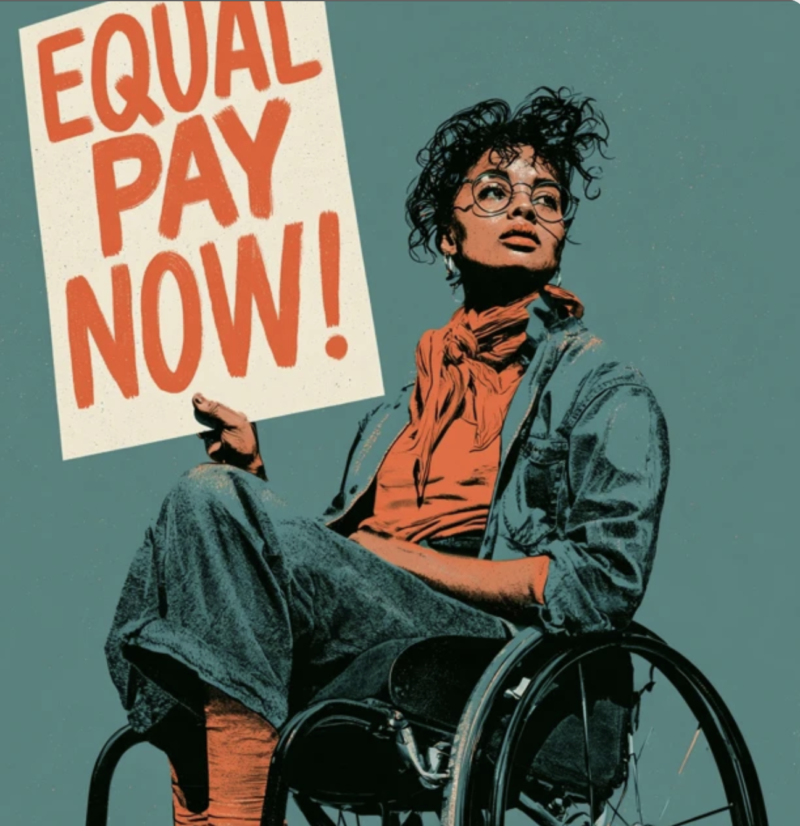
Organizations Highlight Large Pay Inequality for Disabled Women, Especially Disabled Women of Color
In October, the National Partnership for Women & Families (NPWF) and its coalition partners observed the third annual Disabled Women’s Equal Pay Day.
The day brings light to the wage gap that disabled women face: They are paid just 56 cents for every dollar paid to nondisabled men, leaving them with $24,000 less each year to cover everyday expenses and the additional costs associated with living with a disability.
If disabled women did not lose $24,000 to the wage gap, they could afford one of the following:
Nearly two years of child care.
Two years of tuition and fees at a four-year college, or three times the full cost of tuition and fees at a two-year college.
Nearly two-and-a-half years of food.
More than one year of premiums for employer-based health insurance.
More than one year of monthly rent and utility costs.
Nearly one year of mortgage payments.
To pay off their student loan debt in less than two years.
Four-and-a-half years of disability-related expenses.
While disabled women who work full time throughout the year fare slightly better – paid 68 cents on the dollar – many disabled women of color face wider gaps. The National Partnership’s latest analysis of Census Bureau data finds that among full-time, year-round workers, for every dollar paid to a white, nondisabled man:
Disabled Latinas are paid 53 cents.
Black disabled women are paid 57 cents.
American Indian and Alaska Native (AIAN) and multiracial disabled women are paid 60 cents.
White disabled women are paid 64 cents.
Asian American, Native Hawaiian and Pacific Islander (AANHPI) disabled women are paid 73 cents.
The Disabled Women’s Equal Pay Day Coalition is calling for policy changes that will help alleviate challenges and break down barriers that the disabled community faces as a result of the wage gap and of inequities in the workplace and beyond.
“Disabled women deserve to be paid fairly for their work, yet persistent inequities and barriers in the workplace continue to undermine their economic security,” said Taryn Williams, senior fellow for disability at the National Partnership for Women & Families.“At a time when so many policies that support disabled people’s ability to work, earn a living, and fully participate in their communities are under attack, we cannot afford to leave disabled women behind. We must advance policies that address these inequities and ensure disabled women have a fair opportunity to thrive.”
“Disabled women are doing way more with less, caring for ourselves and our families despite lower pay and soaring costs,” said Kenrya Rankin, managing director for Disability Culture Lab and a disabled mom. “Awareness is a start, but … we need action. We need to vote for candidates who will actually close the wage gap by ending subminimum wages and passing a national living wage for all workers, from disabled workers to incarcerated workers to service workers.”
“With underemployment rates rising and overall uncertainty in the workforce, many disabled women are being forced into gig and part-time work without reliable income, benefits, or financial security as costs are skyrocketing,” said Jasmine Williams-Jacobs, founder and director at Black Remote She. “We are especially seeing this among black disabled women and trans workers nationwide who have experienced record layoffs in the last two years. Disabled women, alongside all other workers, should be compensated with equitable, living wages and policies in place to protect them regardless of work status.”
“Women with disabilities bring their talent and leadership to every single sector of our economy.” said Marlene Sallo, CEO of the National Disability Rights Network. “Yet, many continue to encounter limited opportunities and unfair pay practices. Providing staff accommodations, removing barriers to hiring processes, and insisting upon disability training for ALL individuals in the workforce will help fill these gaps.”
“Through our labor, both paid and unpaid, disabled women contribute significantly to our nation’s economy. Yet, the current economy and the workforce is designed to work against us when it should be working for us and with us,” said Maria Town, American Association of People with Disabilities president and CEO. “From closing the wage gap to modernizing outdated public benefits standards, to expanding access to home and community based services, we know the solutions that will create an economy where everyone can thrive. Disabled women are already working to achieve this reality. We need others to join us.”
“The wage gap facing disabled women is not simply a matter of unequal pay. It reflects the compounded effects of racism, sexism, and ableism in systems that undervalue their labor, limit economic opportunity, and too often penalize efforts to build financial security,” said Kate Caldwell, PhD, director of research & policy at the Collective for Racial & Disability Justice, UCLA Law. “Disabled people should not have to choose between earning a living and accessing the health care, services, and supports they need to live independently. Closing the wage gap is essential, but economic justice also requires dismantling the structural barriers that deny disabled women autonomy, opportunity, and security, regardless of their employment status.”
The following organizations make up the Disabled Women’s Equal Pay Day Coalition: American Association of People with Disabilities, Association of People Supporting Employment First, Autistic Self Advocacy Network, Black Remote She, Center for American Progress, Center for Economic and Policy Research, The Center for Law and Social Policy, Collective for Racial and Disability Justice, Crip the Law, Disability Culture Lab, Disability Rights Education and Defense Fund, Equal Pay Today, Equal Rights Advocates, Ford Foundation, National Academy of Social Insurance, National Disability Institute, National Disability Rights Network, National Partnership for Women & Families, National Women’s Law Center, New Disabled South, The Arc, and The Century Foundation.
This article was adapted from information provided by the National Partnership for Women & Families.
I have cerebral palsy hemiplegia, which affects my right side. Growing up with it has been complex. It has been difficult and a struggle, especially in recent years.
My body doesn’t feel like it’s mine. My body and mind are not connecting like I want them to. My mind tells my body to relax, but my body resists. It’s a battlefield. My body fights against me, and I don’t understand why because I want the best for it.
Some of the challenges I face are physical and mental exhaustion. My first job after college was working at the Goodwill. When I first started working there, my body couldn’t take it. I would get home and fall asleep in my clothes. I couldn’t even do basic tasks like showering or brushing my teeth because my body was telling me to rest, and I wasn’t going to push it any harder than I already had. The environment was very toxic, with a lack of support and understanding.
The second job I had was working the front desk at a hotel. I was in training, and the company let me go because I wasn’t working at its required speed. I was “too timid” and not focusing on what customers were saying. I was trying my best.
During this time, I was using TARC3, a system that provides transportation for people with disabilities. Unfortunately, it didn’t work well for me and didn’t offer the support I needed. Sometimes, the drivers couldn’t find my address, and once, a driver got gas and made me late for work. At other times, drivers would stop for coffee, napkins, or other things when they were taking me to work. It was very unprofessional and disorganized. Those things should have been taken care of beforehand. Unfortunately, people with disabilities are always taken advantage of, even in systems that are supposed to help us.
Being a woman with a disability, my menstrual cycle hits me hard. I get bad cramps. Hot flashes. Headaches. I get sick. Sometimes, the headaches turn into migraines that are like a throbbing pain that takes over my whole head and my neck muscles. I can’t function. It’s hard to think straight, and my body feels weak. Everything hurts. I can feel fine, and then the migraines come out of nowhere. Heart palpitations are also a symptom and something that I already struggle with. I have to take medicine to manage the migraines, and one of the side effects is heart palpitations. It’s a win-lose situation. My migraine is gone, but then my heart is palpitating for the whole day. I have to watch what I eat, especially caffeine and sugar, because I have a bad sweet tooth. It’s really bad when I become hormonal, and I’m craving nothing but sugar and caffeine. This damages my sleep schedule as well.
I also suffer from generalized anxiety disorder. I overthink a lot, and I worry about my future too much. On top of constantly being reminded that the world is not built for me, I feel like a burden. I don’t feel good enough, no matter how hard I try. No one will truly understand how hard I’m trying to survive in a world that doesn’t want me.
A lot of things have changed over the years. As an adult with a disability, I’m not cared for like I was as a kid. Since I’m not “fixed” like society wanted me to be, my needs are not important anymore. When I was a kid, I was able to go to therapy once every week. Now, my visits are limited.
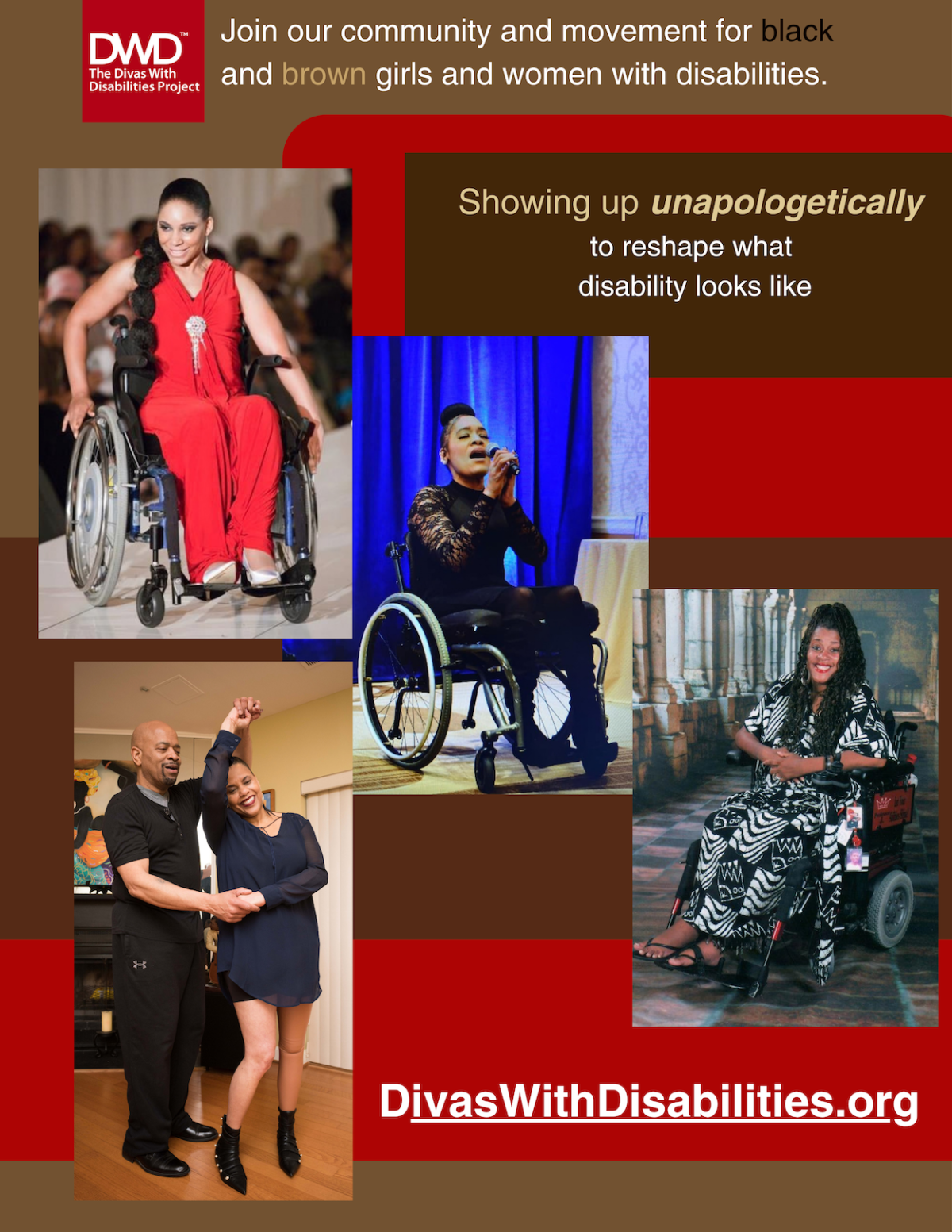
However, not all things are bad. For the better, I have found a community. I have connected through the Divas With Disabilities TikTok platform and found that there are people out there who feel exactly like I feel. I’m not alone like I thought I was. People want to hear from me. They want to hear my stories, and I’m happy to share them.
Divas in the City digital series is a groundbreaking digital webseries that centers the lives of black and brown women with disabilities.
Season 1 serves as a powerful testament to the brilliance, leadership, and unapologetic presence of disabled women navigating urban life as “Bosses, Baddies, and Beauties.”
Season 1 spotlights:
Disabled Entrepreneurs: Women building businesses and redefining economic power.
Cultural Influencers: Visionaries who are shifting the landscape of fashion, art, and media.
Community Leaders: Activists taking their cities by storm and leading with fearless action.
This season highlights five great women:
Zazel-Chavah O’Garra – Founder and Artistic Director of ZCO/DANCEPROJECT and a professional model and actor.
Melva Henderson – Founder and CEO of the nonprofit Living Beyond Limits, author, and disability advocate.
Karen Gasperini-Quiles – Children’s author of the “Arianna’s Magic Boots” series, model, and speaker.
Kebra Moore – Number 1 best-selling Amazon novelist (writing as Midnight Storm), singer, and disability activist.
“We created this digital webseries to amplify the voices that too often go unseen. Every episode honors the women who show up as themselves—boldly, beautifully, and without compromise.” — Dr. Donna Rena Walton, EdD, & Tameka Citchen-Spruce
New Kids’ Council gives young patients a seat at the table and a voice in shaping hospital and clinic experiences
Kids’ Council at Ochsner Children’s Credit: Ochsner Health
Ochsner Children’s has launched a Kids’ Council, a first-of-its-kind advisory council at Ochsner, made up of pediatric patients ages 5 to 18. This interactive council gives children and teens a real voice in shaping hospital and clinic experiences, ensuring the patient journey is designed with kids, not just for them. At Ochsner Children’s, young patients won’t just be heard. They’ll help make decisions.
Kids’ Council members will review hospital and clinic practices, share feedback about their experiences, and offer ideas for making care more welcoming, comfortable and supportive for children and families from across the Gulf South. When their recommendations lead to action, the decision becomes an official Kids’ Decree, giving council members a visible role in creating change throughout Ochsner Children’s.
Ochsner Children’s created the Kids’ Council to ensure children are active participants in decisions that affect their care. Members represent a wide range of ages and medical experiences, bringing valuable perspectives on what matters most to young patients and families.
“The experts on being kids are kids,” said Beth Walker, CEO of Ochsner Children’s. “The Kids’ Council gives us the opportunity to listen directly to our patients and learn from their experiences. Their ideas, creativity and honesty will help us make meaningful decisions that reflect what matters most to the children and families we serve.”
The council held its inaugural meeting on Aug. 19, 2026, bringing members together for a collaborative discussion focused on improving the patient experience across Ochsner Children’s facilities.
“I like that I can make a difference that I would not normally be able to make if I wasn’t on the Kids’ Council.”
– Isla J., member of the Kids’ Council.
Decisions, Fun Homework Assignment
During their first meeting, Kids’ Council members met Ochsner Children’s leaders, discussed future topics and initiatives, and unanimously approved an exterior clinic signage project. They also received their first assignment: to answer, “If you could make one thing better for kids at the hospital, what would it be?”
“I like that I can make a difference that I would not normally be able to make if I wasn’t on the Kids’ Council,” said Isla J., a member of the Ochsner Children’s Kids’ Council.
Hospital leaders say the council reflects Ochsner Children’s ongoing commitment to patient- and family-centered care by giving young patients a meaningful role in shaping the future of pediatric healthcare.
Whether it’s finding ways to make a hospital stay more comfortable, creating more welcoming spaces, or helping shape future programs, Kids’ Council members are proving that big ideas can come from even the smallest voices.
“We want every child to know that their voice matters here,” said Walker. “The Kids’ Council is helping us see our hospital and clinics through the eyes of our patients, and that perspective is invaluable as we continue to enhance the care and experience we provide.”
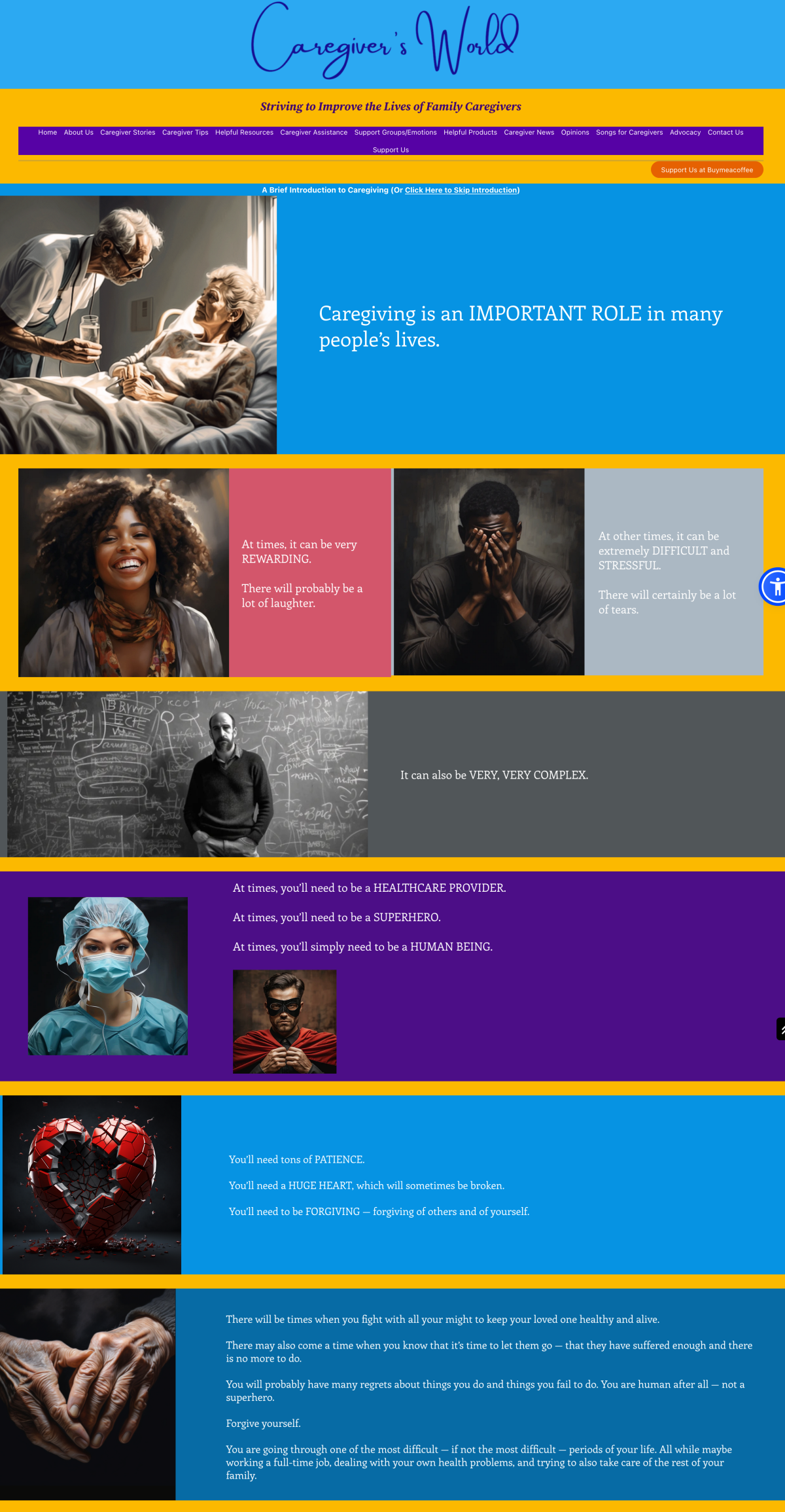
New Website Seeks to Assist and Support Family Caregivers
Caregiving can be challenging under the best conditions. Rick Bowers, the founder of Caregiver’s World, a new website that seeks to improve the lives of family caregivers, has been there. He understands.
To help others with the types of challenges he faced, the website includes caregiver stories, tips, opinions, and news, as well as information about support groups, advocacy, and physical, emotional, and financial health.
“Being a caregiver for my parents was one of the most rewarding aspects of my life,” says Bowers. “It was also the most difficult thing I’ve ever done. My goal is to help make other caregivers’ lives a little easier.”
Finding Purpose Through Adversity: Car Accident Leads to Dream Job
Finding work that gives your life meaning isn’t always easy, especially during trying times. But Serena Hou of Jersey City, New Jersey, found that good can come from even the most difficult situation. After a car accident, a back injury, five years of persistent pain, and subsequent surgery, Hou found her sense of purpose at Hospital for Special Surgery (HSS) in New York City, where she now works.
A Life Disrupted by Pain
Hou, 37, says the 2018 car accident turned her life upside down.
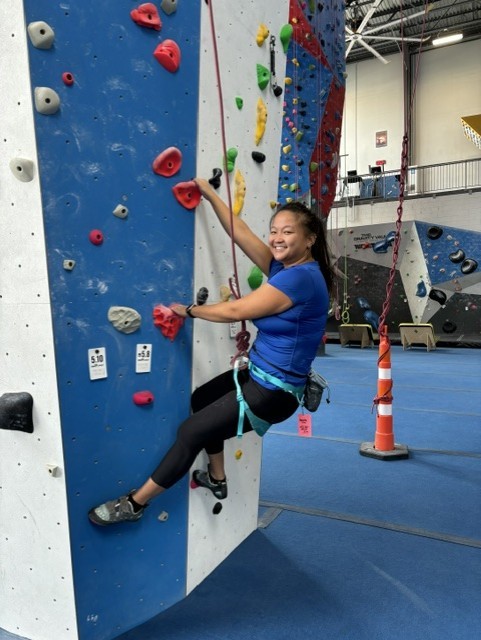
“What started as minor discomfort in my lower back quickly spiraled into debilitating pain down my leg—a constant, burning ache that made walking feel like an uphill battle,” she recalls. “My love for rock climbing, a passion that had once made me feel invincible, became a distant memory.”
The pain forced Serena to give up strength training and running for exercise. Even simple tasks, such as carrying a bag of groceries, were impossible.
She was diagnosed with a herniated disc pressing on a nerve and causing sciatica. Despite physical therapy and several epidural spinal injections, the pain persisted.
“My loved ones encouraged me to avoid surgery, fearing the risks, and I often questioned if I could endure the pain much longer,” she says.
Spine Surgery Provides Relief
By 2023, Serena decided surgery could be her best option, and she made an appointment with Francis C. Lovecchio, MD, a spine surgeon at HSS and at the HSS Spine Center in Paramus.
“When I first met him, I was discouraged and emotionally drained,” she recalls. “He listened to me with genuine empathy and took the time to understand my journey. For the first time in years, I felt a glimmer of hope.”
Hou underwent a microdiscectomy—a minimally invasive procedure performed under a microscope to remove a small part of a herniated disc. She says she experienced immediate pain relief.
“For the first time in years, I could walk without pain. The sense of freedom and relief was indescribable.”
Within six months, she returned to rock climbing and other activities she had been forced to give up after the car accident.
“It was really cool for me to see how impactful the surgery was for Serena,” Dr. Lovecchio says. “For us, as spine surgeons, these procedures are a daily part of our lives. So, it’s always gratifying to see how transformative and life-changing it can be for our patients.”
Microdiscectomy surgery generally takes 30 to 60 minutes, and most patients leave the hospital the same day.
Serena Hou. Credit: Serena Hou
“For the first time in years, I could walk without pain. The sense of freedom and relief was indescribable.”
Inspired to Join HSS
With her own background in healthcare, Hou recognized the quality of care she had received at HSS.
“I felt seen, heard, and supported at every turn. Their commitment to patient care went beyond clinical expertise; it was deeply human,” she explains. “It inspired me so much that I applied for a position at HSS, eager to bring the same level of dedication to others that I had experienced.”
Hou now works with orthopedic residents and fellows, supporting their research at HSS.
“As a program coordinator, I work every day to support the team that gave me my life back,” she says. “I feel like I really do meaningful work. Each time I see a patient walk through our doors, I remember my own journey and feel honored to play a small role in their recovery.”
Hou posted her story on the HSS Back in the Game website to inspire others who may be considering spine surgery to improve their quality of life.
This article is based on an HSS press release from Newswise.com.
American Cancer Society Partners With Others to Build Free Lodging for Traveling Cancer Patients and Their Caregivers
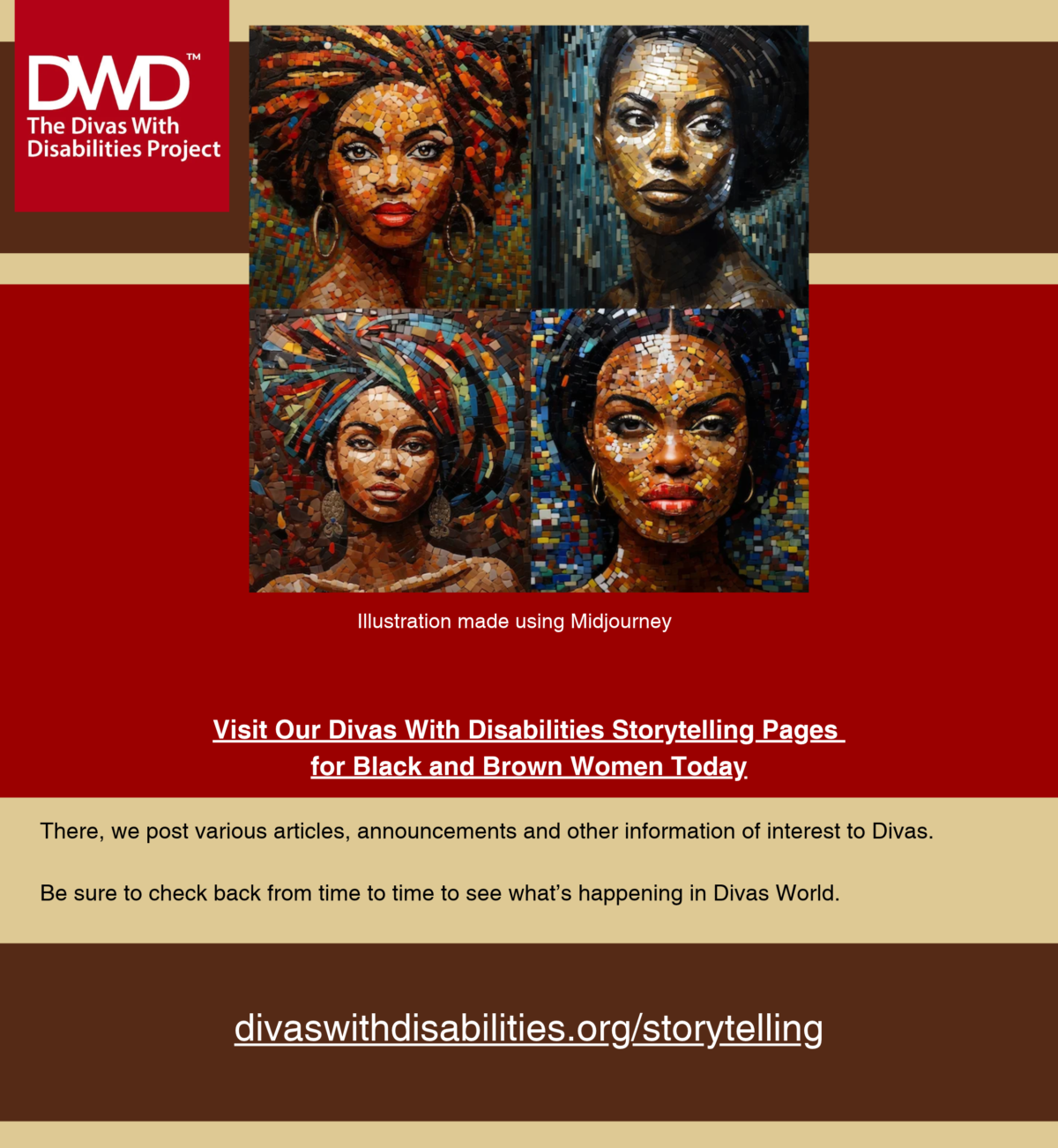
Image produced using Midjourney
Patients traveling long distances to the University of Chicago Medicine for cancer treatment will soon have a new place to stay close to its anchor hospital on the city’s South Side, as part of a partnership with the American Cancer Society.
The American Cancer Society plans to build Hope Lodge Chicago, a facility that will provide free accommodations for cancer patients and their caregivers who travel to Chicago for treatment.
The project is being developed through a partnership between the American Cancer Society and community partners, with UChicago Medicine serving as the primary partner. The University of Chicago will provide the property through a long-term lease, and the medical center will contribute funds toward construction.
“Exceptional cancer care should be within reach for every patient who needs it,” said Tom Jackiewicz, president of the University of Chicago Health System. “Hope Lodge Chicago will help make it easier for patients to travel to Chicago for care, while giving them the opportunity to remain close to the people who support them most.”
“Cancer care is increasingly complex, and patients often need to travel to academic medical centers to access specialized expertise, advanced therapies and clinical trials,” said Kunle Odunsi, MD, PhD, director of the UChicago Medicine Comprehensive Cancer Center. “For patients and families already navigating the physical and emotional challenges of cancer, the cost and logistics of traveling for treatment can become another burden. Hope Lodge Chicago will help address that burden and allow patients to focus more fully on their care.”
Hope Lodge Chicago will be the American Cancer Society’s 32nd Hope Lodge. The organization currently operates 31 other locations across the United States and Puerto Rico.
This article was adapted from a University of Chicago Medical Center press release via Newswise.com
UTHealth Houston Team Reverses Diabetic Nerve Pain in Mice
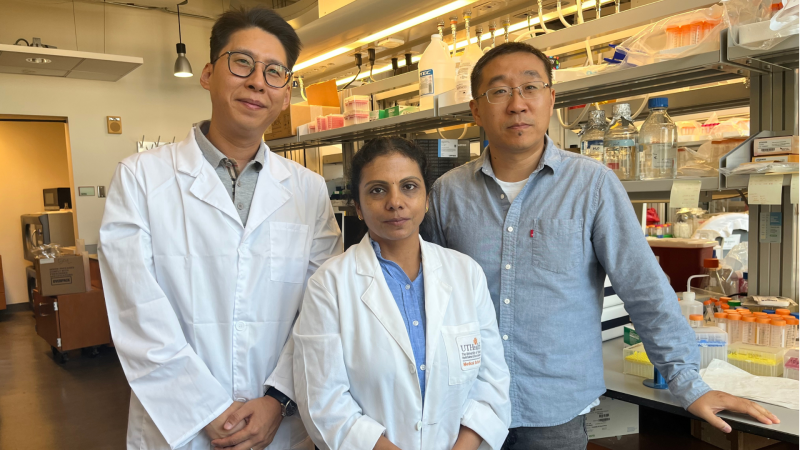
From left: Kibaek Lee, PhD; postdoctoral research fellow; Sushma Krishnan, PhD; research scientist and Xin Alex Ge, PhD. Credit: Photo by UTHealth Houston
A team of UTHealth Houston researchers slowed and even reversed diabetic nerve damage in mice, bringing researchers one step closer to developing a treatment for humans.
The research was published in Science Translational Medicine.
Diabetic peripheral neuropathy describes nerve damage in the hands, legs and feet caused by diabetes. Over time, high levels of blood sugar can injure nerve fibers, with symptoms ranging from numbness, a tingling or burning sensation, muscle weakness, to pain and cramps.
Up to half of the more than 40 million individuals with diabetes in the United States will develop peripheral neuropathy, making it the most common chronic complication of diabetes.
“There is no good drug for managing peripheral neuropathy,” said corresponding author Xin (Alex) Ge, PhD, professor in the Texas Therapeutics Institute at The Brown Foundation Institute of Molecular Medicine for the Prevention of Human Diseases within McGovern Medical School at UTHealth Houston. “There are painkillers and other drugs, but they are only targeting the symptoms.”
To cure the condition in mice with Type I and Type II diabetes, the team focused on an enzyme known as matrix metalloproteinase-9, or MMP-9. This enzyme can break down other proteins found between tissues. It is responsible for excess immune response in the peripheral nervous system and disease progression that impairs wound healing.
Ge and the team developed monoclonal antibodies, a type of treatment that blocks matrix metalloproteinase-9 activity in a highly specific manner.
“This gives us hope that we can not only relieve the symptom, but also reverse the progression of disease.” – Xin (Alex) Ge, PhD, professor in the Texas Therapeutics Institute
“Developing an antibody that selectively targets MMP-9 has been challenging because MMP-9 is closely related to other enzymes. To overcome this challenge, we combined a camelid-inspired antibody library design with a functional selection approach to identify antibodies that specifically inhibit MMP-9,” said first author Kibaek Lee, PhD, a postdoctoral research fellow at the Institute of Molecular Medicine. “These new biotechnologies separate our antibodies from others.”
Mice injected with the antibodies regenerated nerve fiber and showed improved wound healing in their paws.
“This gives us hope that we can not only relieve the symptom, but also reverse the progression of disease,” said Ge, who holds the Kay and Ben Fortson Distinguished Chair in Neurodegenerative Disease Research at McGovern Medical School.
This work is partially supported by the NIH HEAL Initiative, a project with the goal of developing safe, effective and nonaddictive pain medications.
Sushma Krishnan, PhD, a research scientist at the Institute of Molecular Medicine, was a co-author on the paper.
Authors from Duke University Medical Center include Wei He, PhD; Yutaka Matsuoka, PhD; Sangsu Bang, PhD; Jing Xu, PhD; Qin Zhang, MD; and Ru-Rong Ji, PhD.
Additional authors include Xinli Liu, PhD; Letao Ma, MS; and Weiyuan Hu, MS, of the University of Houston, and Luda Diatchenko, MD, PhD; Xiang Ao, PhD; and Marc Parisien, PhD, of McGill University.
This article was adapted from a UTHealth Houston press release via Newswise.com.